
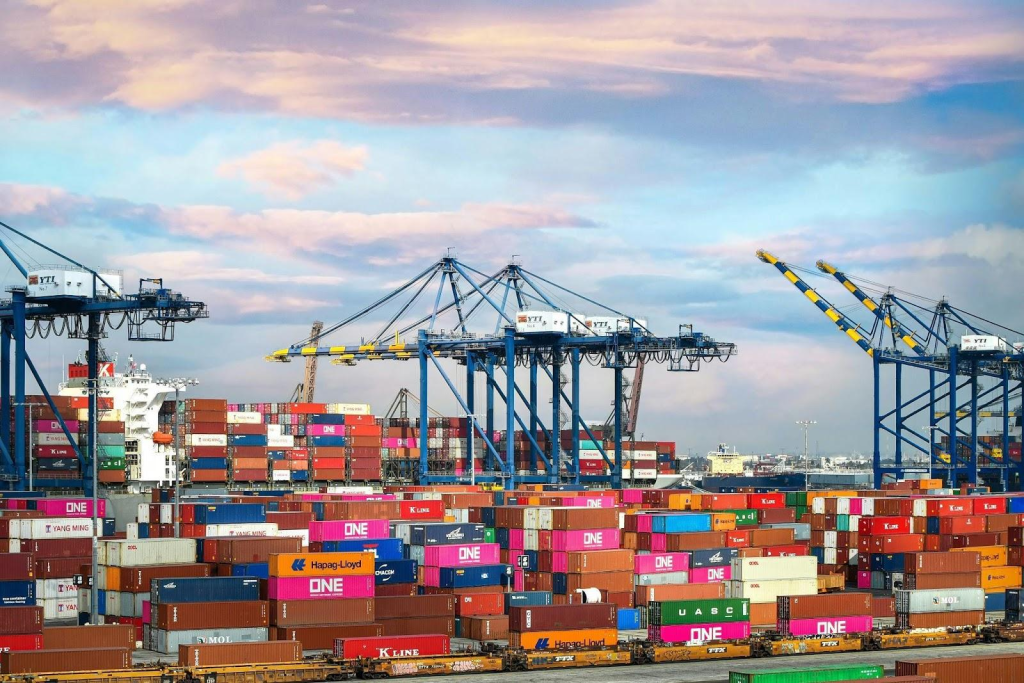
We were pleased to hear that the dock workers' union and employers have reached an agreement to end the port strike. Although markets remain tight due to weather conditions affecting operations, there’s plenty to be optimistic about moving forward. The year 2025 looks particularly promising! As a business with an interest in the well-being of your logistics needs, you can expect operations to expand, and we're actively pursuing new ones to help our clients drive new growth.
The longshoremen's union still needs to vote on the deal, but approval is expected. You should be aware that a potential strike is looming on the U.S. East and Gulf Coast ports. The International Longshoremen's Association (ILA) and the U.S. Maritime Alliance (USMX) have negotiated and reached a new agreement. Continue reading to learn about the situation and other nuances that are influencing the shape of shipping.
Leaders from the U.S. dockworkers' union and the representatives of their employers resumed talks until reaching an agreement. This meeting is a welcome sign for you as an importer or exporter, as it may help avoid a labor disruption that would shut down every major port on the U.S. East and Gulf Coasts. These ports account for roughly half of all container volumes in the country!
The container shipping industry has managed to avoid a potential overcapacity crisis in 2024 thanks to an unexpected development: the Red Sea crisis. The Houthi rebels have forced vessels to take longer routes around Africa's Cape of Good Hope. The global container fleet expanded significantly in 2024, growing by 10.6% and adding nearly 3 million TEUs of capacity.
However, rather than flooding the market with excess capacity as many had feared, these additional vessels were largely absorbed by the Asia-Europe trade route, where ships were diverted around the Cape of Good Hope to avoid dangerous Red Sea passages.
This diversion affects the number of voyages a container ship can make in a year. For example, a ship that could typically complete six voyages through the usual passage may now only be able to make five. Increasing speed isn't a feasible option due to fuel costs and emissions issues, which means shipping companies need more vessels to maintain efficiency. The disruptions caused by the global supply chain crisis in 2020, 2021, and 2022 continue to impact the industry and, ultimately, you as a business relying on freight shipping for the supplies you need.
Two Sides To The Strike
In the negotiations involving the International Longshoremen's Association (ILA) and the U.S. Maritime Alliance, there are two sides at play. The ILA represents American dock workers, while the U.S. Maritime Alliance consists of a consortium of international corporations, including seven foreign shipping firms and a port operation entity called Ports America, which Canada actually owns.
In November, as freight rates were declining, you might have noticed a shift when things began to change in December. Trade Winds reported that container freight rates climbed as shippers tried to beat U.S. strikes and tariffs. An unseasonal surge in container volumes reflected uncertainty over what 2025 has in store. Ocean carriers raised concerns about potential strikes and disruptions, leading shippers to front-load their cargo to mitigate risks.
You should be aware that freight rates for ocean shipping are established at two key points during the year. The Asia to Europe rates go into effect on January 1st, and the Asia to America rates take effect on May 1st.
As of December 30, 2024, there was an update regarding the ILA and U.S. Maritime Alliance negotiations. The conditional agreement on wages expired on January 15th. After the three and a half day strike on October 1st, an agreement was reached to increase wages along with a port handling fee for each container that is moved.
If you look back to 2017, when the new lane of the Panama Canal opened, the first new lane since 1914, meaning larger ships can now pass through. These larger vessels can carry up to 16,000 TEUs, compared to the older ships that carried about half that amount. As a result, there was a decrease in cargo being transported from the West Coast through this new lane of the Panama Canal to the East and Gulf Coast. You might have noticed that the West Coast, which once handled over 50% of cargo, dropped below that mark.
Several factors contributed to this shift. One of which was when the Panama Canal experienced issues with low water levels due to problems on Gatun Lake, forcing a reduction in the number of ships and overall cargo capacity moving through the canal.
Freight Rates Increasing
In fact, you might have noticed an increase in freight rates recently!
One essential point to remember is that ocean carriers generate revenue as a percentage of freight rates. This means that higher freight rates equate to greater profits for carriers, which is crucial for their business. In 2016, you'll see that freight rates were quite stable, but the global supply chain crisis caused significant spikes, including periods when over 100 ships were stranded off LA and Long Beach.
Freight rates fluctuate between two time periods: spot rates, which are short-term and often discussed in the media, and long-term contracts, which make up about 70% of all cargo movements. These long-term rates are typically negotiated at specific times. Given various factors, such as the overcapacity of ships being stuck in the Red Sea, you may notice freight rates artificially rising.
Interestingly, ocean carriers are not as focused on automation as many believe; only about 8% of the world's terminals are automated. While U.S. ports like Los Angeles, Long Beach, and New York-New Jersey rank among the 25 largest globally for container movement, their efficiency ratings don’t reflect that due to the criteria set by the World Bank. They tend to favor transloading ports over ingress/egress ports like those in the U.S.
Possible Routes The Dealings Could Have Taken
Thankfully, both parties reached an agreement. Members of the ILA and the U.S. Maritime Alliance finalized a deal that covered wages and container handling. Lastly, there were some points to address regarding automation, which was one of the biggest pain points of the whole movement.
Let's consider what other routes this could have taken:
A Strike
While the timing is vital, you’ll notice January 15th falls in the middle of a week, and January 20th was President Trump’s inauguration, this reduced the likelihood of another strike. Despite Trump’s mixed history with labor, he has shown support for the ILA. Both sides typically want to avoid a situation that would look bad for them right before such a significant event. If a strike did occur, it would likely have been short, possibly similar to the duration of previous strikes.
An Extension
Another possibility was an additional contract extension. If an extension were to happen, perhaps for a month or longer, it would have pushed past the TPM conference and the new rates being set from Asia to the U.S. An extension could have benefitted both sides: for labor unions, higher freight rates are favorable, while ocean carriers would want to avoid returning to the low rates characteristic of the pre-COVID era.
Considering the dynamics, if you’re part of the shipping industry, a contract extension might not have been a bad option. Both sides could have potentially seen advantages in prolonging the discussions and ensuring stability in freight rates.
The Part Technology Played In The Dealings
The significant role of technology was highlighted in their negotiations, emphasizing that great strides were made in this area. Reflecting on the lessons learned from the 2012 contract, the creation of a subcommittee to specifically address technology concerns was mentioned. With insights gained from past agreements, they were able to clarify the language surrounding automation issues, ensuring a contract that serves both parties well.
At one year into the six-year agreement, the commitment and relationship between the ILA and the U.S. Maritime Alliance have never been stronger. Together, they have introduced creative solutions that may not be immediately visible but have a significant impact behind the scenes. Two key pillars for success in situations like these are flexibility and productivity. These elements are crucial for meeting the demands of both members and carriers. By focusing on increasing volume and maximizing productivity, contracts like these could become some of the most successful yet.
Where are shipping companies currently directing their investments? The reality is they are most often heavily investing in a new vessel replacement program, spending significant amounts due to environmental concerns and greenhouse gas emissions.
Moreover, they’re channeling funds into automation, focusing primarily on the West Coast, particularly in LA and Long Beach. This area offers a better return on investment than other locations. As you examine this issue, remember not to just focus on the ILWU and criticize their stance against automation. There are two sides to this coin, and both sides are partnershipping for the best outcome, which is a great outcome from the conflict that had been expressed by the workers.
Where import volume concentrates, the truck market around those ports takes an uneven hit that a national average smooths right over, a blind spot I break down in how regional freight pressure hides behind the national number.
Choose National Freight Connection
Are you facing challenges in logistics management within your business? If so, you’re in the right place. At National Freight Connection, we understand the complexities that can arise in logistics, and we’re here to help you tackle those issues head-on. Our team specializes in providing expert logistics solutions tailored to your specific needs, ensuring smooth and efficient management processes. With our extensive experience and dedication to client satisfaction, you can trust us to help you resolve your logistics conflicts effectively.
Don’t let logistics challenges hold you back, partner with us for professional support you can rely on. Give us a call today at (931) 200-5601 for more information or to schedule our professional services.