

Modern businesses rely on supply chain management, which brings together suppliers, producers, distributors, and sellers. Logistics management is crucial in this process, ensuring goods move smoothly from production to customers. It involves sourcing materials and delivering finished products efficiently.
What is Supply Chain Management (SCM)?
Supply Chain Management (SCM) coordinates services, goods, and materials to transform raw materials into finished products for customers.
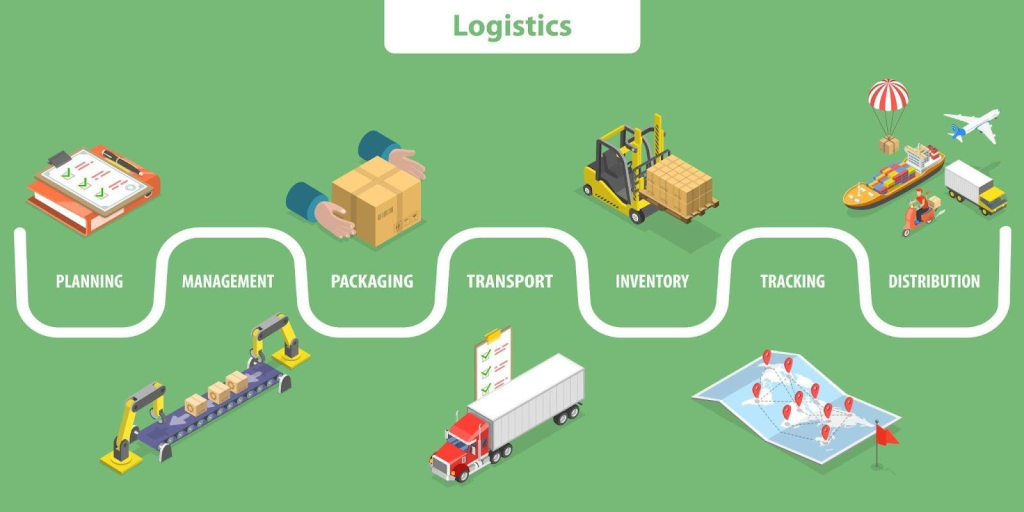
Its key components include:
- Suppliers: They provide raw materials to prepare end products precisely.
- Producers: These entities modify the above raw materials to produce the final products.
- Distributors: They buy prepared products in bulk from producers and resell them to merchants.
- Merchants: They sell final products directly to customers.
- Warehouses: Products are stored, managed, and shipped from these warehouses to merchants and customers.
- Shipping: Shipping of products via buses, ships, and airplanes.
SCM covers everything from production to product setup and each step to ensure successful preparation. It includes efficiently managing businesses to increase the value of their customers by cutting expenses, upholding quality standards, and gaining a competitive edge.
Importance of Supply Chain Management
Supply Chain Management (SCM) is crucial in global trade because it helps businesses run smoothly and keep customers happy. It saves money by improving how things are made and reducing waste. SCM also ensures that products get to customers on time and in good shape, which keeps them returning. It also encourages using clean energy and eco-friendly products, which makes companies look good.
Benefits of Supply Chain Management (SCM)
Effective SCM has numerous advantages that can affect every facet of a company, including:
- Financial Performance: Businesses with efficient supply chains frequently have higher sales, lower costs, and better asset utilization, all of which contribute to superior financial performance.
- Productivity: Supply chain management (SCM) improves operational efficiency by reducing lead times, inventory levels, and process simplification.
- Customer Experience: SCM increases customer loyalty and satisfaction by guaranteeing prompt delivery and high-quality items, which encourages recurrent business and a favorable reputation.
- Market Responsiveness: When their supply chain is operating efficiently, businesses can react rapidly to market fluctuations, unexpected possibilities, and competitors' challenges.
Phases of Supply Chain Management (SCM)
SCM is broadly divided into five main phases, each phase is important to ensure an effective supply chain.
- Planning: This phase of SCM involves forecasting demand, identifying and adapting production plans, scheduling resources, and accurate planning to balance supply as per customer needs.
- Sourcing: This phase is important for selecting suppliers and managing and negotiating relationships and contracts with them to ensure the delivery of high-quality materials at reasonable prices. It guarantees the availability of resources at the time of need.
- Production: In this phase, the raw materials are modified into final products, integrating timely production schedules and tool maintenance.
- Delivery: Shipment of final products from distributors to warehouses, asset control, and dispatches of goods to end customers.
- Returns: This phase deals with managing returns and exchanges of defective or unwanted products to maintain customer retention and satisfaction.
Key Features to Ensure Effective Supply Chain Management

Several key features must be taken into consideration to ensure impactful SCM.
- Visibility: Real-time transparency allows merchants to monitor each step, from raw materials to final products. This helps them recognize any obstacles on time and results in effective optimization.
- Collaboration: Powerful collaboration with suppliers, producers, merchants, and customers is essential to coordinating effectively and sharing all information on time.
- Automation Integration: Technological advancements such as automation, AI, and cloud computing can markedly increase efficiency. They can also reduce time, cost, and errors. Some examples of automated integration used in SCM include RFID and tagging, etc.
- Flexibility: A flexible supply chain can rapidly respond to fluctuations, changing customer needs, and any unexpected market circumstances. It’s necessary to reduce risks and maintain quality benchmarks.
- Data Analytics: Organizations can use data analytics and predictive modeling to gain meaningful insights into demand variations, market trends, and possible hazards. This promotes continuous improvement, encourages proactive decision-making, and cultivates a data-driven culture that accelerates corporate success.
Address Your Future Supply Chain Needs Today with National Freight Connection!
Businesses need to prioritize investing in the right technology and solutions to stay ahead of the competition and successfully address upcoming supply chain issues. We at National Freight Connection provide sustainable supply chain management and have a workforce capable of managing modern supply chain dilemmas.
Use our experience to expedite your international shipping.
Contact us at (931) 200-5601 to guarantee a seamless and secure supply chain management journey!
FAQs
What is the main purpose of Supply Chain Management?
SCM's main objective is to maximize and streamline the flow of products and services while cutting costs, raising customer satisfaction levels, and gaining a competitive edge.
How does cloud technology benefit SCM?
Cloud technology's scalability, accessibility, cost-effectiveness, data integration, and cutting-edge capabilities, such as artificial intelligence and machine learning, allow supply chains to function more effectively and quickly.
Why is visibility important in SCM?
With visibility, businesses can detect delays, track goods and resources in real time, and make well-informed decisions to streamline operations and lower risks.