
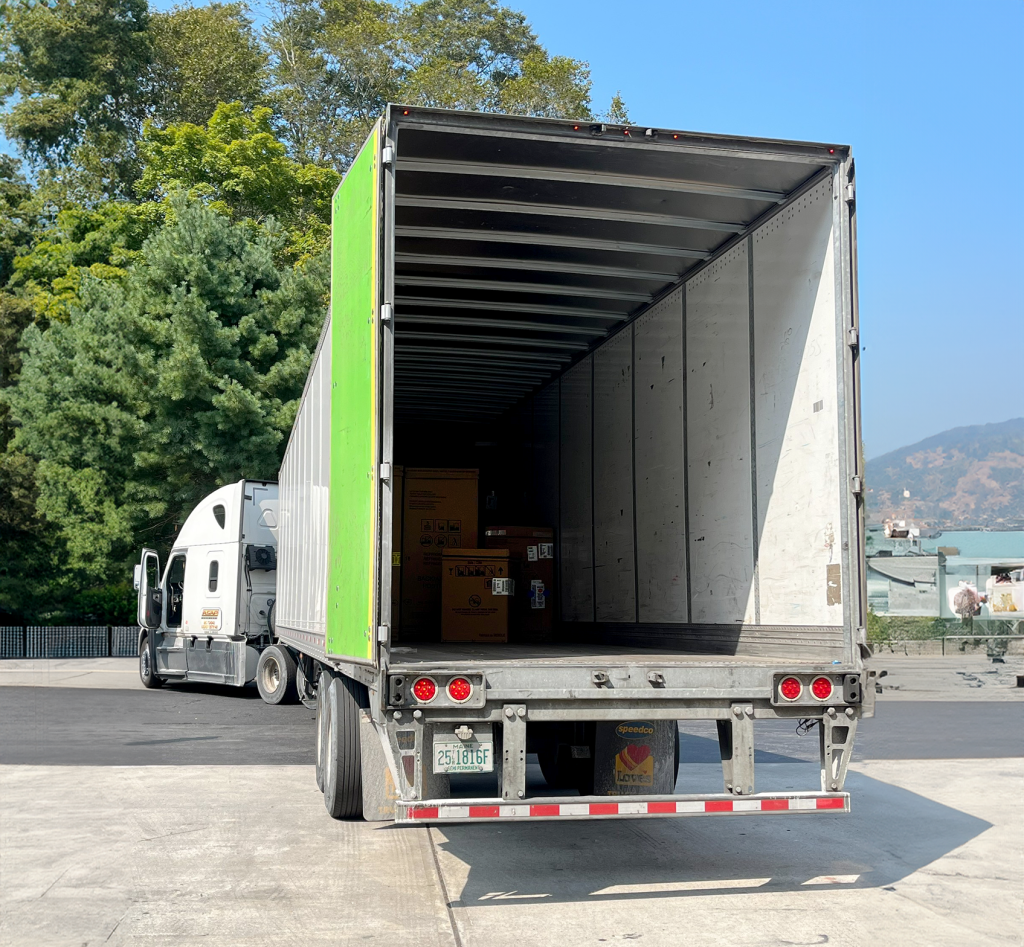
Market proximity provides numerous useful advantages for companies. Transportation expenses are significantly lower because shipping distances are shorter, and routing is much more efficient. Delivering lead times is much shorter, allowing companies to respond faster to market demands and carry minimal inventory. Further geographical closeness also facilitates supply chain visibility, facilitating monitoring and controlling products on the move. Logistics coordination is also made simpler with fewer intermediaries and communications issues to handle, making it easier to manage the supply chain with smoother operations and fewer complexities.
We're seeing a critical shift in U.S. trade flows - a strategic realignment from China, with Mexico and ASEAN countries becoming market leaders. These trends bring challenges and opportunities to companies engaged in international trade.
Understanding Sector Impact
Companies dealing with logistics solutions must comprehend how these innovations impact major sectors of various industries. The transformation of production plants and component sources has introduced new supply chain issues in producing electronics and machinery. Food and beverage manufacturing has been radically reorganized in sourcing patterns and distribution channels, especially with more regional alliances.
Chemical process operations have adjusted to new supplier dynamics and regulatory frameworks in various world regions. The pharmaceutical development industry has changed radically, with changing production sites and raw material acquisition methods reorganizing to new market realities.
As your logistics partner, we will help you navigate these changing market realities. Our discussion addresses the drivers for these changes, their effects on industries, and the logistics management strategies to effectively deal with this new reality.
At National Freight Connection, we are dedicated to helping you understand these changes in trade patterns. Let's discuss how these changes could impact your business operations and see ways to maximize your supply chain in this new environment.
Historical Context of U.S. Trade Relationships
The United States-China trade has been the linchpin of global commerce for decades. China was in a record-breaking position as America's foremost trading partner in pre-2017 years, with volumes totaling more than $650 billion every year.
The bilateral relationship excelled in every industry:
- Manufacturing: China served as the primary source for electronics, textiles, and machinery
- Consumer Goods: U.S. retailers relied heavily on Chinese imports for everyday products
- Raw Materials: Significant trade flow of metals, chemicals, and industrial components
This robust relationship began shifting due to several key factors:
- Rising labor costs in China
- Increased automation capabilities in competing nations
- Growing concerns about intellectual property protection
- Supply chain vulnerabilities exposed during global disruptions
- Implementation of tariffs and trade restrictions
The US business world reacted by stretching its supplier webs, hoping to substitute for other countries' production bases, such as Southeast Asia and Latin America. This was an early shift in the long-term realignment that changed world trade patterns and ushered in new alliances and opportunities.
Shifts in Import Trends Now
Recent data indicate sharp shifts in U.S. import patterns, with Chinese trade percentage decreasing by 6 points in key sectors. This opened up new opportunities for alternate sources of supply and reoriented established supply chain lanes.
Key Import Changes:
- Electronics imports from China decreased by 14%
- Machinery sector experienced a 12% reduction
- Textile imports declined by 16%
Mexico will become America's biggest trading partner in 2023 as a result of taking advantage of nearshoring potential and proven capacity for production.
Advantages of Market Proximity
Market proximity provides numerous useful advantages for companies. Transportation expenses are significantly lower because shipping distances are shorter, and routing is much more efficient. Delivering lead times is much shorter, allowing companies to respond faster to market demands and carry minimal inventory. Further geographical closeness also facilitates supply chain visibility, facilitating monitoring and controlling products on the move. Logistics coordination is also made simpler with fewer intermediaries and communications issues to handle, making it easier to manage the supply chain with smoother operations and fewer complexities.
ASEAN nations have advanced considerably in U.S. trade, and their combined share has increased by 2-4 percentage points. Leading the charge here is Vietnam, particularly in electronics parts, consumer products, and machinery for industry.
This import diversification push is part of a broader trend of American firms trying to build strong supply chains. Companies now like multiple locations of sources policy instead of concentrating on one market in an effort to provide a well-diversified trading portfolio.
The transformation has given rise to new investment patterns, with US companies setting up manufacturing hubs in Mexico and ASEAN countries. The investments enhance regional value chains and provide capacity for additional trade expansion.
Sector-Specific Analysis
The electronics industry has witnessed the sharpest fall in U.S. import trends. China's proportion of electronics imports declined by 14.6 percentage points, paving the way for other production centers. Vietnam was a key intermediary of electronics exports to the U.S. market.
Electronics & Machinery Trends
Vietnam is a leading destination for U.S. electronics imports, currently responsible for 27% of total volume. Vietnam has created sophisticated manufacturing plants that have effectively processed components from other Asian origins. The sophisticated assembly lines specialize in manufacturing smartphones, laptops, and other consumer electronics. Amazing is the fact that Vietnamese producers have managed to adopt quality control procedures that meet stringent U.S. standards, thus emerging as a trustworthy trade partner for electronics.
The machinery sector shows similar patterns, with a 15.2% decline in Chinese imports. U.S. businesses now source industrial equipment and components through diversified supply chains across Southeast Asia.
Mexico's rise in food and beverage imports tells an equally compelling story. The country's proximity to U.S. markets and established trade relationships through USMCA created ideal conditions for growth.
Mexico's Food & Beverage Gains
Mexico has posted incredible growth in food and beverage exports to the U.S. market. Fresh produce imports have posted a phenomenal growth of 22%, while processed food exports have grown by 18%. The beverage industry has also grown incredibly, with imports growing by 16%. These increases are especially advantageous to U.S. consumers, who get to enjoy lower transport costs due to Mexico's locational proximity.
The prosperity of the trade bloc is also supported by the fact that Mexico is seriously committed to high food safety standards that are very similar to U.S. standards. This complementarity is behind ensuring the free movement of goods with maximum quality control and consumer protection standards.
These product-specific adjustments are a part of a larger shift in global supply chains. US companies align procurement strategy for preserving competitive advantage and constraining risk. The change allows new logistic companies to establish specialized handling for various products.
Geopolitical Impacts on Supply Chain Dynamics
Russia's behavior in Ukraine led to dramatic shifts in American patterns of exports, especially in energy commodities. The European nations, looking for alternative sources of Russian energy supplies, turned to the U.S. as a dependable ally. The change witnessed a rise in U.S. liquefied natural gas (LNG) exports to Europe, hitting record levels in 2023.
These geopolitical tensions have reshaped logistics management strategies across industries:
- Route Modifications: Companies now prioritize safer shipping routes, avoiding conflict zones
- Inventory Management: Businesses maintain larger safety stocks to buffer against supply disruptions
- Supplier Diversification: Organizations adopt multi-sourcing strategies across different regions
The ripple effects extend beyond energy sectors. U.S. agricultural exports to Europe have increased as Ukraine's production capacity remains constrained. These changes require logistics providers to adapt their operations, develop new transportation networks, and establish alternative supply routes to meet evolving market demands.
The current geopolitical landscape has transformed from a cost-optimization focus to a risk-management priority, pushing businesses to reevaluate their supply chain strategies.
The Role of Logistics Management
Effective logistics management is crucial for adapting to the changing import landscape. It forms the foundation of a successful supply chain. To navigate these changes, you need to implement strong distribution strategies that align with new trade patterns.
At National Freight Connection, we've seen how strategic logistics solutions can lead to success. This is how we do it:
By thoroughly reviewing our partner's needs and then aligning them with the most suitable carriers, we designed a tailored solution that addressed their immediate needs but also grew with their expanding business.
Key Elements of Successful Logistics Management
An elastic routing capacity must be needed to reconfigure transportation networks for the suppliers' new locations. Trade lanes are reconfigured, and markets are opened while the firms must reconfigure routes in real-time. Real-time visibility has become more critical, as the tracking equipment monitors shipments in different trade lanes, providing valuable input for decisions and customer service.
Risk management is key in modern-day logistics operations, with organizations having to develop complex contingency plans for supply chain disruptions on new trade lanes. Such plans have to suit different situations and contain concise instructions to maintain the continuity of business operations.
Cost savings continue to be the focal point, with businesses attempting to balance reliability and efficiency in new supply chain designs. This entails aggressive examination of modes of transport, carrier choice, and routing strategies to achieve the most cost-efficient options without compromising risk exposure management and service levels.
The Emergence of Mexico and ASEAN as Primary Trading Partners
The rise of Mexico and ASEAN countries as big trade partners has created specialized logistics challenges for corporations. Companies have to learn specialized skills to deal efficiently with every detail of foreign trade. Managing multiple customs processes efficiently is the key now since each geography has its own rules and paperwork demands. Documentation across borders necessitates minute detail care and a detailed understanding of geographical specifications.
Coordinating multi-modal transport on these emerging trade channels calls for high-level logistics management so that trade is easy. Further, the question of maintaining regulatory compliance across geographies has also emerged as an issue because firms need to adapt to various regulatory environments without impacting the smooth flow of trade.
Your logistics approach must evolve with such changing trade patterns. Collaborating with experienced experts who understand the sophistication can allow you to form robust supply chains that drive your business.
Future Implications for U.S. Trade
The future of U.S. trade is going to witness radical change after 2024. Based on our analysis, there is a 25-30% growth in trade diversification across the globe as companies pursue alternative supply chain networks aggressively.
Major Trends Shaping the Future of U.S. Trade
Regional Manufacturing Hubs are transforming the landscape with the creation of specialized manufacturing clusters in Mexico and Southeast Asia. The creation of such hubs is opening up new possibilities for streamlined production and distribution networks near end markets.
Technology Integration is transforming trade operations, with supply chain optimization through artificial intelligence and blockchain technology offering greater transparency in global trade networks. Such new technologies are enhancing efficiency and augmenting decision-making capability.
Sustainability is now a core issue, with an increased focus on green logistics and carbon footprint management. Organizations are adopting greener methods in supply chains to ensure environmental compliance and customer demands.
Risk Mitigation strategies have evolved to include the development of redundant supply networks and local supply opportunities. Companies are diversifying supply sources and establishing standby systems to maintain continuity of operations during disruption.
Opportunities:
- Reduced transportation costs through nearshoring
- Access to diverse supplier networks
- Enhanced supply chain resilience
Challenges:
- Initial infrastructure investment requirements
- Adaptation to new regulatory frameworks
- Training and workforce development needs
Over the next five years, we can anticipate even faster shifts in trade flows, and your businesses need to stay flexible and agile in how they react to market forces. Your supply chain strategy needs to change by adopting these new trends while being operationally efficient as well.
Select National Freight Connection
The shifting import patterns in the U.S. pose challenges and opportunities for your company. To compete successfully in the international market, you must plan and adapt strategically to these shifts in the supply chain.
At National Freight Connection, we understand how daunting it may be to adjust to these changing trade trends. With our experience in logistics management and track record of successful business partnerships, we are highly equipped to assist you in maximizing your supply chain operations.
Want to adapt your logistics strategy? Contact National Freight Connection at (931) 200-5601 to discuss how we can provide customized logistics solutions that meet your specific requirements.