
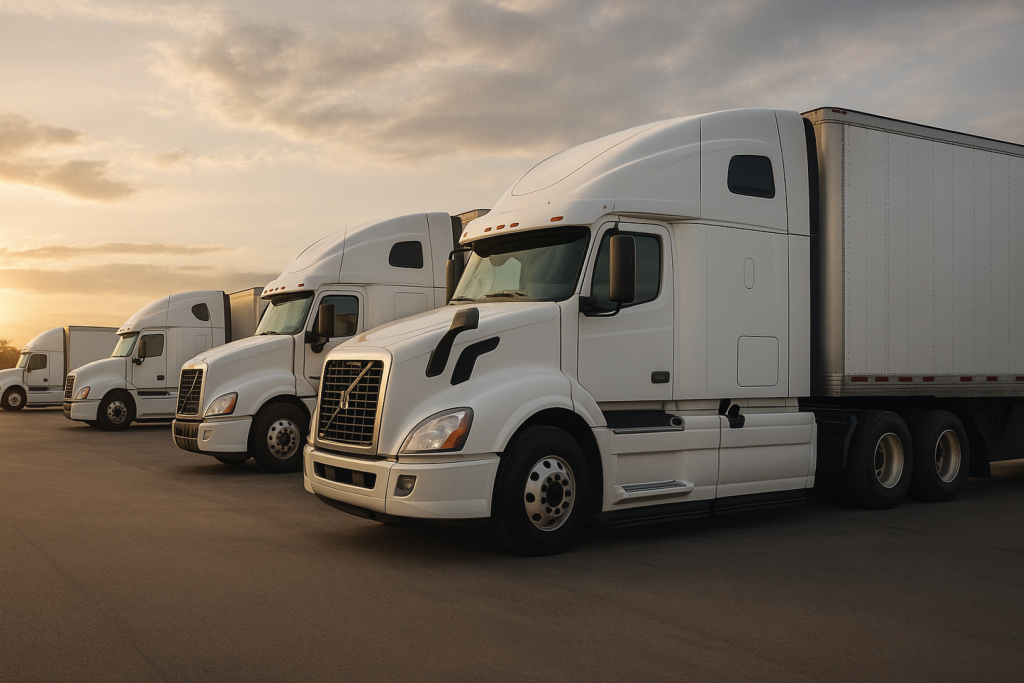
After years of turbulence, dry-van carriers in 2025 face a strange mix, too much capacity, not enough freight.
According to C.H. Robinson’s North America Freight Insights, the recovery is slow and uneven. Carriers that scaled fast during the 2021–2022 boom are now downsizing or folding under rising costs, falling spot rates, and idle trucks.
But smart growth is still possible 💡. The secret? Scale with discipline, not emotion. Here’s how to do it right.
📊 1. Growth Starts With Numbers, Not Emotion
Before adding another truck, know your numbers cold:
✅ Cost Per Mile: If you’re not profitable on your current units, more trucks = more problems.
✅ Revenue Per Mile & Utilization: Trucks should run 90%+ loaded miles to justify expansion.
✅ Cash Flow Consistency: Have at least 3 months of positive returns after fuel, maintenance, and payroll.💡 Example: A small carrier running 5 units in Kentucky paused growth until it cut deadhead by 8%, improving margins by $0.12 per mile. Sometimes, waiting pays.
In 2025, discipline is the new expansion strategy.
🚚 2. Add Capacity With Clear Intent
Don’t grow “just to grow.” Tie every truck to real freight.
🔹 Customer Commitment: Add trucks only after locking in contracts or dedicated lanes.
🔹 Regional Expansion: Strengthen your footprint before chasing new states.
🔹 Trailer Strategy: Drop trailers at customer sites to increase turns, flexibility without full asset overhead.
💡 Example: One Midwest carrier added trailers for a beverage client instead of more tractors, boosting revenue per truck by 15% without new debt.
Smart scaling = fewer trucks, more control.
🏭 3. Find Strength in Niche Freight
The spot market may be flat, but niche freight still pays. Focus on lanes and commodities others overlook:
💼 Consumer Staples: Paper goods, cleaning products, and packaging always move.
🏗️ Regional Manufacturing: Short-haul industrial freight offers consistency.
💎 High-Value Cargo: Shippers will pay premiums for security and GPS-tracked trailers.
📦 E-Commerce Fulfillment: Retail and parcel distribution remain resilient.
Find your niche, own it, and become the go-to carrier for that freight type. Reputation is your best marketing strategy.
💰 4. Manage Risk Like a CFO (Even if You’re an Owner-Operator)
Growth brings exposure, so protect your base.
💡 Debt vs. Cash: Keep financing below 50% of fleet value.
💡 Lease vs. Buy: Lease during uncertainty; buy when cash flow is stable.
💡 Reserves: Keep 60–90 days of operating capital per truck.
💡 Freight Mix: Balance 70% contract freight with 30% spot to stay flexible.
🧩 Example: A 3-truck carrier in Texas survived the 2024 dip by leasing instead of buying, allowing them to downsize quickly when demand dropped.
Smart risk management keeps you in the game when others fold.
⚙️5. Build Systems Before You Build a Fleet
Adding trucks is easy. Managing them efficiently is not.
Before expanding, ensure you have:
🖥️ A TMS or dispatch platform to manage load flow.
📋 Automated billing and maintenance systems that prevent chaos.
👷 Driver recruiting pipelines so new equipment isn’t parked waiting for talent.
Every new truck should come with a process improvement. Growth without systems = burnout waiting to happen.
🚦 Final Thought: Scale at the Speed of Sustainability
In this market, the biggest fleets won’t win, the best-run ones will.
Scale where you have proven freight. Invest where returns are predictable. And protect your cash flow like your business depends on it, because it does.
📞 Call to Action
Looking to grow smart, not just big? Partner with National Freight Connection (NFC) for the lanes, support, and insights that help carriers scale sustainably in 2025 and beyond.
📞 Call: (931) 200-5601
📧 Email: [email protected]