
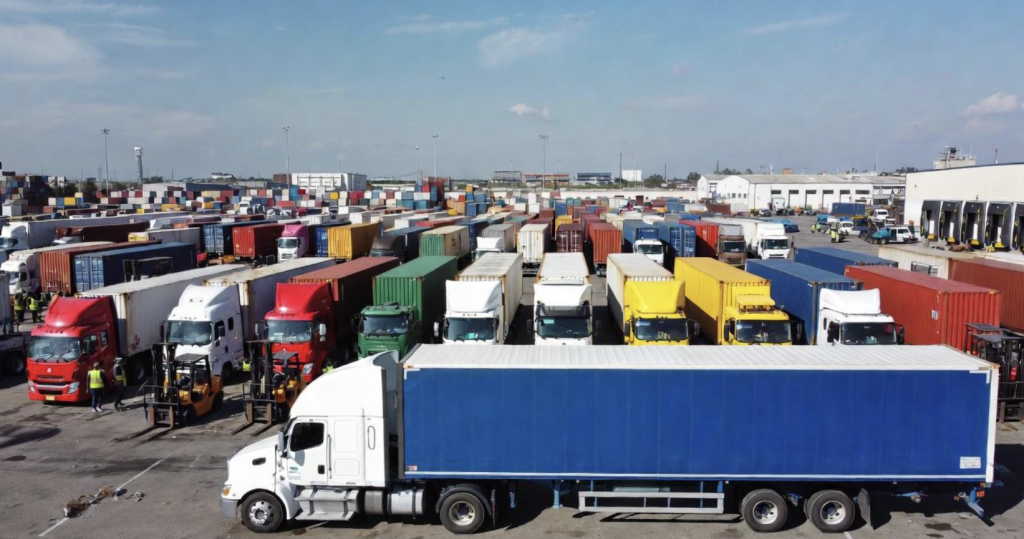
From one-truck dream to fleet giant, how to scale a dry-van business in 2026.
No matter how big they are now, every carrier started the same: one truck, one driver, one dream. But the freight market of 2026 won’t reward just the gritty. It will crown the organized.
Owner-operator to small or mid-size fleet: it’s time to take the next step in building your business.
But how to do it with a still-soft rate environment, high capacity, and opportunity just on the horizon?
The goal: Scale with structure.
Not just grow for growth’s sake, but with an eye for the future. In the next six months, the road less traveled will separate from the pack.It’s time to invest in your dry-van business with an eye for 2026 and beyond.
Here’s how:
1. Build the Business Before You Add the Trucks
You can’t just buy a bunch of trucks and call it a day. The business side must be ready first.
Here’s your to-do list before the next truck roll-out:
Legal Structure: File an LLC or corporation, get legal entity status, lender credibility, and liability protection.
Operating Authority & Insurance: Keep USDOT/MC active, with insurance rates filed in all states you’ll operate.
Back-Office Systems: Spend on a TMS, accounting, and dispatch tools early, automation pays, while paper-shuffling doesn’t.
Driver Policies: Have written safety, pay, and compliance policies, even if you’re a one-person operation.
💡 Example: An owner-operator in Indiana grew to five trucks in 24 months simply by having processes and systems in place first, not scrambling to create them later.
Remember, a one-truck operation runs on instinct. A multi-fleet carrier runs on systems.
2. Know Your Numbers: They’ll Tell You When to Grow
Expansion is great, but only when the math works. Get your numbers straight first, then add
capacity. Track cost per mile, break-even point, and return on truck (RAT) before expanding.
📊 Targets to watch:
Operating Ratio: Keep under 95% (that is, you keep at least $0.05 of every revenue dollar).
Capital Cushion: Keep 60–90 days of working capital per truck.
Break-Even Miles: Know exactly how many loaded miles it takes to cover fuel, maintenance, and payroll.
Return on Investment: Expect a minimum of 15–20% net profit per truck before replicating.
💡 Example: One carrier in Florida waited an additional 3 months before growth to fix internal inefficiencies and add two new trucks with 10% better profit margins.
The math needs to say yes before you do.
3. Add Drivers & Assets With Precision
You know when to grow, but now you have to decide how to grow.
Adding that second or third truck (and driver) is where leadership begins.
Hire for reliability, not just availability. A one good driver is worth three so-so ones.
Get freight lined up before equipment. Dedicated or contract lanes are safer than speculative spot freight.
Safety & onboarding: A good safety record lowers insurance and opens new freight options.
Build support before you need it. Hire part-time help (dispatcher, bookkeeper) before demand overwhelms you.
💡 Example: A 10-truck fleet owner in Georgia added a part-time dispatcher before buying more trucks, and doubled operational efficiency overnight.
Think of each truck as its own business unit, fully profitable and accountable.
4. Strengthen Before You Diversify
Expansion is exciting, but don’t fall in love with the first shiny thing. Focus on consistency first, then expand. Mastery leads to growth, not the other way around.
Some questions to ask:
Have we built reliable revenue with our existing lanes and customers?
Are we backup-driver or spare-equipment ready?
Are new lanes synergistic, or will they cannibalize existing lanes?
💡 Example: A mid-size fleet in the Midwest passed on lucrative cross-border freight because it lacked the equipment to haul it safely.
Don’t spread yourself thin. Grow with purpose.
5. Manage Risk Like a CFO, Not a Driver
The more trucks and miles you add, the more things that can go wrong.
Manage the downside as you scale.
Debt Discipline: Don’t finance more than 50% of your fleet value.
Maintenance Predictability: Preventive schedules, telematics, and parts budgeting.
Compliance: Stay ahead of FMCSA audits, driver qualifications, and hours of service.
Lane Flexibility: Diversify lanes by both shipper and geography to limit the impact of freight droughts.
💡 Example: A 10-truck carrier cut maintenance costs by $40K per year by implementing telematics and preventing issues before breakdowns.
Risk management becomes more, not less, important with growth. Neglect it at your peril.
6. Think Like a CEO: Lead, Don’t Just Drive
It’s one thing to add assets and staff, but growth means leadership, too. That’s the difference between operating and owning a business.
Delegate daily dispatch.
Standardize driver training for safety, customer service, and compliance.
Review KPIs weekly: cost per mile, on-time %, truck utilization, revenue per truck.
Reinforce company culture: safety, service, accountability. Celebrate wins, learn from mistakes.
💡 Example: An owner-operator with three trucks took one day off the road each week to manage operations, and boosted revenue by 25% year over year.
Remember, your role is less operator, more owner, as you scale.
Final Thought: Scale by Design, Not by Accident
No doubt the old way of doing things built some of the biggest fleets in 2025. Unbridled expansion, trucks piling on trucks, haphazard hiring.
All true, but it’s also fast-fail growth in 2026’s competitive dry-van market.
But with systems, financial discipline, and strategy, the one-truck business of today can be the 10+ truck business of tomorrow.
Size won’t make you strong, structure will.
📞 Call to Action
Partner with National Freight Connection for dedicated freight, operational support, and scalable solutions for real carriers.
👉 Connect with NFC today.
📞 Call: (931) 200-5601
📧 Email: [email protected]