
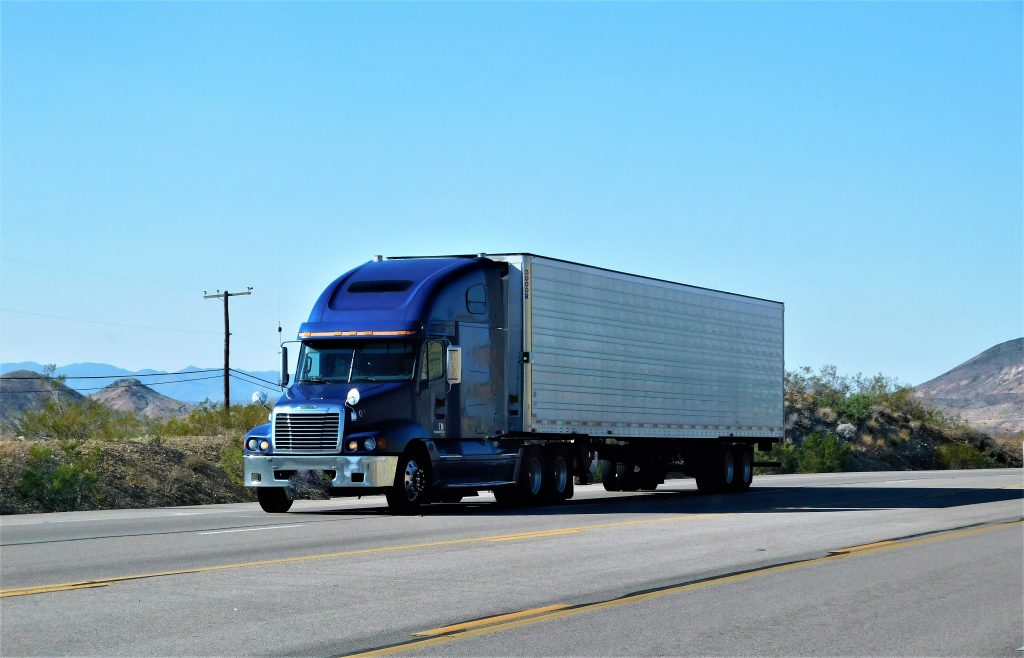
Simply put, the Interstate Highway System is a brilliant example of American ingenuity, creating a network that completely changed how transportation works within the country. At its core, it's straightforward: four lanes, a median, and carefully planned on-and-off ramps. However, that simplicity belies the huge influence this has on how goods are managed and transported throughout the United States.
The system's design incorporates standardized road specifications for smooth freight movement, strategic connectivity with direct routes between economic centers, controlled access with limited entry/exit points for smoother traffic flow, and wide coverage within 25 miles of most urban areas. The system has a profound impact on commerce in America. For example, a manufacturer in Salem, Oregon, can get goods to the port in Oakland in 9 hours, 13.5 hours faster than via other routes. That time differential makes all the difference in cost savings and operational efficiencies for companies.
The effect on local economies is massive. For instance, Oregon would lose 15% of its income without Interstate 5 alone. This demonstrates the system's critical role in lowering transportation costs, providing shorter delivery times, enabling just-in-time inventory systems, and giving competitive advantages to businesses. For every dollar invested in the Interstate system, at least six dollars in economic benefit have been generated by it, perhaps the most successful infrastructure investment in America.
A Historical Perspective on the Interstate Highway System
The history of America's Interstate System began with a remarkable journey in 1919. A military convoy of 79 vehicles took off on a grueling transcontinental trip from the White House to San Francisco. The trip proved quite an eye-opener, taking 62 days to cover the distance at an average speed of only 5.65 miles per hour. Lieutenant Colonel Dwight D. Eisenhower was among the convoy members who would later become instrumental in creating the Interstate System.
The expedition revealed critical infrastructure gaps, including narrow, unpaved roads, broken bridges requiring disassembly for trucks to pass, limited fuel stations, and inconsistent road quality between states. When Eisenhower became President in 1953, his first-hand experience from the 1919 convoy, combined with what he had seen of the efficient Reichsautobahn system in Germany during WWII, fueled his determination to transform American highways.
His dream became a reality when the Federal-Aid Highway Act was signed in 1956. The Act provided for $25 billion to build 41,000 miles of highway, with 90% of the cost being borne by the federal government. This landmark piece of legislation initiated America's modern Interstate System and made what was a 62-day journey just a 42-hour drive!
Engineering Excellence: Design Standards of Interstates
The Interstate Highway System is ingenious because of its simplicity. The whole network adheres to a standardized eight-page document, "A Policy on Design Standards, Interstate System," which provides specific requirements for construction and safety.
The most important design standards that make Interstates remarkably efficient include controlled access, where the only ways onto and off of the highway are via designated on and off ramps, so there are no intersections and traffic lights. Speed requirements mandate design speeds of 50 mph minimum in urban/mountainous areas and 70 mph minimum in rural areas. Lane requirements specify a minimum of two lanes in each direction with a 12-foot width per lane and a cross slope of 1.5-2% grade for rain runoff. Infrastructure clearance demands 16-foot vertical clearance for tunnels and bridges, though urban areas may have less clearance if there are other routes available.
These standardized specifications make the driving experience uniform across the nation. Simple yet strategic design elements come together to maximize traffic flow while maintaining a high level of safety. Indeed, the safety record speaks for itself: Interstates have less than half the fatalities of non-interstate roads, with only 0.55 deaths per 100 million vehicle miles traveled.
Driving Economic Growth: The Impact of Interstates on Regions
The Interstate Highway System has dramatically reshaped America's economic landscape by creating profound connections among various regions. One example is Oregon, where a single interstate highway, Interstate 5, contributes at least 15% of state income, mostly because its economy is very trade, natural-resource, manufacturing, and agriculture-oriented.
The system's economic influence is particularly notable in certain regions. Southern states like Georgia, South Carolina, and Arkansas received disproportionately high miles of Interstate construction per capita, while Western states such as Utah, Montana, Nevada, and Wyoming benefited from extensive Interstate coverage relative to their population.
The Interstate network reduced relative distances between economic centers by an average of 30%. This reduction creates considerable benefits for businesses. For instance, a manufacturer in Salem, Oregon, can get goods to the port in Oakland in 9 hours using I-5, but without Interstate access, the trip would take 13.5 hours with further obstacles such as weight limits and poor facilities.
While the cost of transportation may be a small percent of product price, the reliability and efficiency of the Interstate system make regions more attractive for business development. Companies invariably select locations with better Interstate access for their operations; thus, highway connectivity is one of the most important factors in regional economic competitiveness.
Enhancing Safety on the Roads: The Life-Saving Impact of Interstates
The Interstate Highway System is a great instance of engineering with safety in mind. Featuring wide lanes, gentle curves, and gradual slopes, these highways have proven to be extremely efficient at keeping people safe on America's roads.
The Numbers on Safety
The numbers actually tell quite a powerful story regarding safety: 1.3 deaths per 100 million vehicle miles on non-Interstate roads, compared to 0.55 fatalities per 100 million vehicle miles on Interstate Highways. This tremendous safety performance difference translates into approximately 6,500 lives per year attributable to Interstate travel. The U.S. Department of Transportation uses $11.7 million per human life in calculating safety requirements, making the yearly safety value of the Interstate system approximately $75 billion.
Why Are Interstates Safer?
Several design elements combine to produce these superior safety statistics: controlled access points, uniform 12-foot lane widths, minimum speed requirements, regulated grade levels, and consistent cross slopes for proper drainage. These standardized safety features make driving conditions predictable, reducing accidents and making long-distance travel much safer for both commercial and personal vehicles.
How Interstates Are Changing Logistics Management
The Interstate Highway System facilitated a logistical revolution in the United States, one that sent a shockwave across how businesses transfer and distribute merchandise. One could point to changes within Oregon, for example. Its manufacturing industry uses Interstate 5 to facilitate a 9-hour, thorough trip to Oakland's port, one that would normally take 13.5 hours over other roadways, affected by weight limitations and poor infrastructure.
New Models for Distribution Hubs
This productivity advantage has reconfigured distribution center strategies. Companies build their warehouses at Interstate intersections to cut transportation costs, expand delivery times, reach several markets from one location, maintain consistent shipment schedules, and facilitate just-in-time inventory systems.
Competitive Advantages for Trade-Dependent Regions
This has a really great effect, especially on trade-dependent areas. Manufacturing plants in Salem, Oregon, use the direct route of I-5 to ship their finished goods to major ports. The easy access created competitive advantages for businesses to keep operational costs lower and have dependable delivery schedules.
Building Efficient Supply Chains
These highways serve as the arteries of modern commerce, enabling businesses to establish efficient supply chains. Uniformity in the design standards of all Interstates, from lane width to speed limits, means that companies can accurately predict how long a given shipment will take and plan operations with logistical precision.
Urban vs. Rural: The Double Edged Sword of Interstates
The Interstate Highway System drew a distinct line between urban and rural development across the country. In rural areas, highways bring economic opportunities that have never been experienced before. Some states, such as Oregon, experienced a whopping 15% increase in income directly related to the Interstate links that provided speedy transportation of their goods and services and opened new business opportunities.
Yet, the story in urban areas is different. When Interstates were constructed through cities, there was a great deal of neighborhood displacement, most notably among low-income neighborhoods. Many neighborhoods were destroyed to make way for highways, physically isolating those communities from the city centers. These physical barriers eliminated access to many opportunities for residents of those affected areas and significantly altered the social dynamic of the cities.
The impact on cities brought lower densities as highways and suburbanization promoted development outward. Car dependency increased as job opportunities became increasingly tied to vehicle ownership. Environmental impact grew as lower population density led to increased carbon footprints, while infrastructure strain left cities facing ongoing challenges maintaining aging highway structures.
Rural communities, especially in the South and West, have derived competitive advantages owing to better connectivity with economic centers. The Interstate system reduced the cost and time involved in transport by about 30%, which therefore made these areas more feasible and attractive for industries dependent on manufacturing and trade.
Looking Ahead: The Future Developments Needed Within the Interstate System
The Interstate Highway System faces many pressing challenges that require creative solutions. Much of our infrastructure is aging and in need of significant rehabilitation; many bridges, tunnels, and roadways built during the system's original construction have reached or exceeded their design life.
Development areas include smart technology integration for real-time traffic management and support of connected and autonomous vehicles, environmental sustainability through electric vehicle charging infrastructure and eco-friendly construction materials, capacity expansion through strategic widening of high-traffic corridors, and safety enhancements with updated features such as improved barriers, lighting systems, and emergency response facilities.
These improvements will require substantial investment beyond regular maintenance budgets. The Federal Highway Administration estimates billions in funding needed to modernize the Interstate system and prepare it for future transportation demands.
Conclusion: Embracing the Power of Interstates for Efficient Logistics Solutions
The Interstate Highway System is one of the brilliant examples of American creativity and planning. From a 62-day cross-country journey, it has now developed into a highly efficient network that provides up to a six-fold return on investment. The interstate system provides a means of reliable and cost-effective transportation over vast distances for logistic management agencies like us here at National Freight Connection.
The effect of the system reaches much further than transportation –- it saves an estimated 6,500 lives annually and in some states counts for as much as 15% of income. The highways connect major centers of economics with outlying regions, enabling business to expand and to compete. We at National Freight Connection harness this tremendous infrastructure to customize logistics solutions for your unique shipping needs. The Interstate system is more than just a web of roads; it's the backbone of modern logistics in America.
Looking to bring the benefits of logistics management to your business? Give us a call today at (931) 200-5601!