
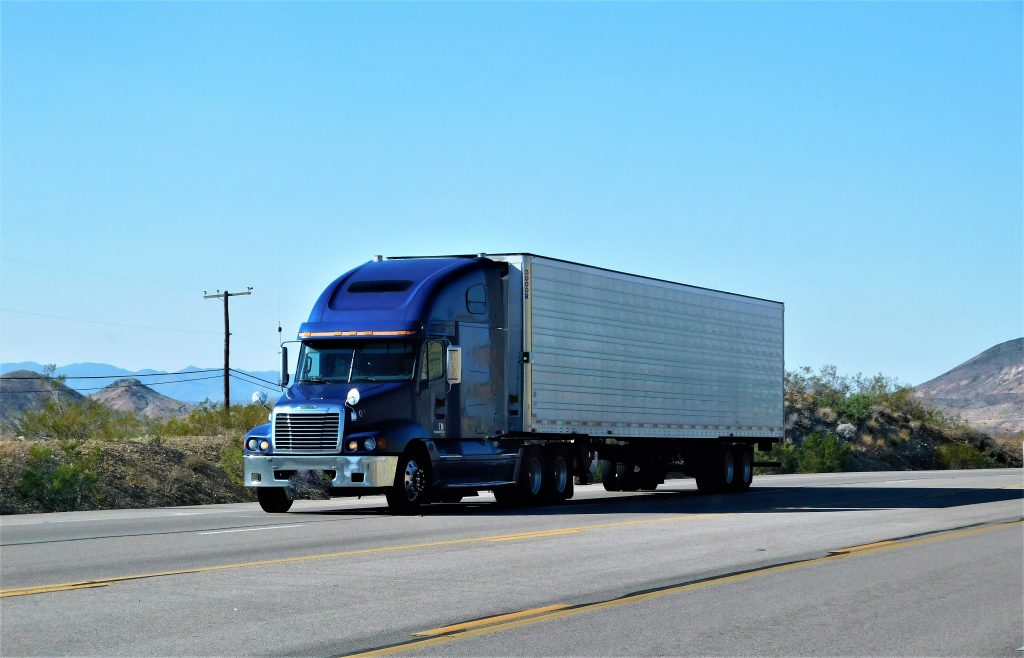
When you think about moving goods around the world, you likely think of giant container ships, mile-long trains, or massive cargo planes, but it's actually the humble truck that does a lot of the stitching together of our world. Long-haul trucking dominates freight transportation and hauls a whopping 73% of domestic freight value, just inside the borders of the United States alone! These mighty machines form the backbone of our modern supply chain, creating vital links between manufacturers and consumers.
Long-haul trucking usually involves transport across state lines or even countries and refers to transporting goods over a long distance, safely arriving at their destinations. It is inarguable the impact that trucking has on the economy. Everything from raw materials to finished goods moves by truck, keeping businesses open and shelves filled. This unbelievable network of drivers, vehicles, and associated infrastructure never stops working day or night as it keeps moving the flow of goods upon which the economy depends.
The term "long-haul" refers to a subcategory in the freight transportation industry where drivers go for long distances to deliver their cargo. Instead of bringing or delivering something within a local area, covering only shorter distances, long-haul trucking may take hundreds or thousands of miles to accomplish a journey. Most of them are characterized by longer durations away from the home base, often interstate or cross-country routes, heavy loads of up to 80,000 pounds (36,000 kg), special equipment and facilities, and complicated logistics planning.
These types of drivers do a lot more than just drive. Their job includes load management, securing the cargo in the truck, and ensuring proper weight distribution. Additionally, they plan routes where they have to navigate through different states with their different regulations as well as perform documentation, maintaining an accurate log of hours driven and deliveries completed. Truck maintenance is also a necessity: making sure to schedule basic checks of the truck and reporting any issues. Lastly, a driver must participate in time management, adhering to very strict limits on driving time. Unlike trucking locally, where drivers can return home every day, long-haul operations demand drivers to be able to live in their trucks for several days.
That being said, the lifestyle brings particular skills and adaptability since a driver has to juggle his professional duties with personal needs while on the road. Long-haul trucking is so much more than a simple matter of point-to-point delivery! In truth, these operations hold a critical place in supply chains, connecting manufacturers, distribution centers, and consumers across long distances.
Specialized facilities that are placed at strategic locations along major highways help make this type of trucking possible. These necessary stops constitute a support network that keeps America's freight moving in an efficient manner. Weigh stations are important to both the safety of trucks and for regulatory compliance. They are located at or near state borders and along highways, requiring trucks to pull in onto huge scales to ensure their weight limits, generally 80,000 pounds on most U.S. highways. Modern weigh stations also utilize high-tech gadgets like thermal cameras to observe brake performance for optimal safety standards.
Truck stops are critical service oases that offer so much more than just fuel. You will find these facilities equipped with shower and bathroom facilities, laundry facilities, banking facilities, medical facilities (including doctors, dentists, and chiropractors), canine grooming facilities, and barber shops. These full-service centers are there because drivers can't leave the highway system on many of their routes since they are dealing with small windows of mobility and parking restrictions in most urban areas.
Life on the Road for Truck Drivers
Living in a truck cab means getting used to minimal living, hands down. The typical list for a home-on-wheels includes a compact bed, a small setup TV, a basic microwave, and essential appliances. The compactness is not because it was a design choice; it's for strategic reasons. With a smaller cab, there is more freight weight allowance possible, meaning more earning potential as a driver.
US regulations stipulate limits to long-haul truck driving: 11 hours of actual driving in a 14-hour window, followed by a mandatory 10-hour rest period. These make for a certain rhythmic regularity to your day-to-day routine, a balance between safety regulations and delivery timelines. The unique challenges of life on the road mean you will be confined to the trucking system, with limited access to services, restricted parking in cities, and negotiating time between mandatory rest and driving hours.
Your world is defined by highways, truck stops, and specialized facilities that are for commercial vehicles only. What this creates is a lifestyle where your sense of efficiency and adaptability become the signature of long-haul prosperity.
Economic Consideration in Long-Haul Trucking
The financial dynamics of long-haul trucking revolve around a simple principle: drivers only make money when their wheels are turning. Most truckers work on a pay-per-mile system, with the average hauler making about 35 cents for every mile logged.
Understanding Operational Costs
The economics become complicated when operational costs are considered, particularly during required rest periods. Idling trucks consume about 0.8 gallons of diesel per hour just to provide power to such amenities as AC, heat, and electronics. At today's prices, a 10-hour overnight stop costs about $20 in fuel alone. This multiplies across hundreds of nights every year to add up and become a major financial burden.
Innovative Solutions to Address Costs
To combat these costs, the industry has come up with a few novel solutions: Auxiliary Power Units (APUs) - smaller, fuel-friendly generators, electric plug-ins at truck stops, and climate control window ducts for stationary trucks. These alternatives will help in decreasing engine wear and tear, warranty impact, environmental footprint, and operational expenses.
Balancing Investments with Potential Earnings
The trick is balancing these operational investments against potential earnings. While upgraded equipment might cost more in the short term, long-term savings on fuel and maintenance can make it a worthwhile investment for owner-operators.
Trucking Innovations on the Long Haul
The trucking sector is always experiencing a technological revolution. Self-driving trucks are fast becoming a reality, with several companies now testing autonomous vehicles that require driver presence only to take control of supervision and emergency situations.
The Future of Trucking: Autonomous Convoys
The next generation of innovation focuses on autonomous convoys: a system where a single lead truck with a human driver leads a convoy of driverless trucks. The configuration significantly increases the amount of freight being shipped per driver while maintaining human oversight over mechanical issues and unforeseen road conditions.
Electric Trucks: A Game-Changing Alternative
The Tesla semi-truck promises to lower energy costs down to 20 cents per mile, while traditional diesel trucks run about 40 cents a mile. Electric models are hindered by battery pack weight, which reduces cargo capacity. Together, autonomous and electric technologies could change freight economics dramatically. A driverless electric truck from Los Angeles to New York would have variable costs of about $550--a fraction of what it costs today.
These technologies address separate markets: autonomous trucks for predictable highway routes, electric vehicles better suited for shorter regional hauls, and hybrid solutions combining human drivers for city navigation with autonomous highway driving. Industry transformation reflects a drive toward efficiency and sustainability, although the journey to full automation will likely happen in incremental steps, starting with dedicated routes between warehouses near highways.
Despite these benefits, challenges persist, including potential job displacement for traditional drivers, battery weight constraints affecting cargo capacity, and the need for infrastructure and charging station upgrades. While electric trucks may initially dominate shorter routes, their impact on sustainability and operating costs signals an inevitable shift toward greener, more automated freight transport.
Choose National Freight Connection
As professional drivers continue their essential day-to-day operations, new technologies continue to reshape the industry. Without professional logistics management, processes like long-haul trucking would not remain efficient enough to remain profitable, let alone successfully transport any goods!
Our team of professionals here at National Freight Connection is always working to improve the logistics processes of both large and small businesses alike. Is your business in need of logistics support? Give us a call today at (931) 200-5601 to learn more about our professional management services.