
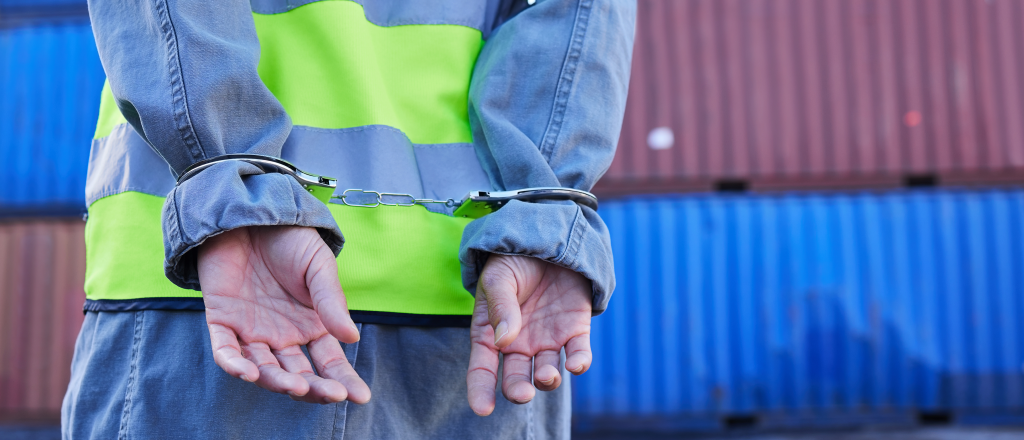
Cargo theft is a continuing issue for the US supply chain with $223 million worth of goods stolen in 2024. Being your reliable logistics carrier, we've seen our fair share of theft operations becoming more and more sophisticated as they target profitable shipments across the country.
Based on available data from CargoNet, thefts have increased by 32% since 2023, and the prime markets where they occur most often are California, Texas, and Florida. These figures are alarming both to businesses and consumers:
- Average loss per incident: $172,000
- Successful recovery rate: Less than 20%
- High-value loads targeted: 45% increase
The effects of cargo theft extend beyond financial loss. It can disrupt your operations, damage customer relationships, and result in increased insurance premiums. As we approach 2025, it is important that we address cargo theft in an effort to have a secure supply chain and safeguard your profits.
At National Freight Connection, we're committed to safeguarding your shipments with cutting-edge security technologies and strategic alliances. Continue reading to see our analysis on why cargo theft is continuing to be a problem and what it is going to mean for your business in 2025.
Getting Familiar with the Present State of Cargo Theft in the U.S.
Cargo theft is nowadays an advanced crime, and advanced gangs of thieves use advanced techniques to steal expensive shipments. These criminal networks now utilize:
Strategic Surveillance: Thieves monitor shipping facilities, tracking patterns and identifying vulnerabilities in security protocols
Identity Theft: Criminal groups create fake companies and documentation to pose as legitimate carriers
Cyber Attacks: Hackers breach transportation management systems to access sensitive shipment data and routing information
The rise of technology has created new opportunities for cargo thieves. GPS jammers disrupt tracking devices, while social engineering tactics exploit human vulnerabilities in the supply chain. Criminals now hack into logistics systems to:
- Intercept shipping schedules
- Manipulate delivery locations
- Create fraudulent pickup credentials
Strategic theft tactics have become increasingly targeted. Rather than stealing cargo at random, thieves now pick out special high-value commodities by reference to immediate market demand. These organized robberies are normally carried out with more than one crew and more than one vehicle, with escape routes preplanned and the use of temporary warehouses to store stolen goods before these are distributed rapidly through well-organized channels. This degree of planning makes it easier for criminals to deliver rapidly stolen merchandise, making it harder to recover and raising the aggregate effect on victimized companies.
The Consumer and Monetary Effects of Cargo Theft in the Supply Chain
Cargo theft creates a catastrophic ripple effect across the U.S. supply chain. The dollar cost is a staggering $15-30 billion annually, with individual incidents averaging losses of $232,000. These numbers don't include indirect costs like:
- Increased insurance premiums
- Lost business opportunities
- Emergency shipment replacements
- Brand reputation damage
The absence of adequate deterrents makes cargo theft a high-reward, low-risk offense. Most thieves get little punishment, with stolen merchandise recovered in a mere 20% of cases. Police officers usually find it difficult to prioritize such cases because of jurisdictional issues.
You're paying extra at the checkout counter thanks to cargo theft. Companies pass these losses to consumers through price increases - experts estimate a 20% markup on retail goods to offset theft-related costs. A stolen shipment of electronics worth $500,000 can result in:
- $100,000 in additional insurance costs
- $50,000 in emergency replacement expenses
- Price increases across product lines
This direct impact on your wallet makes cargo theft everyone's problem, not just a business concern.
Commonly Targeted Cargo Items by Thieves
Cargo thieves have specific preferences when it comes to targets. They prefer to steal high-value cargo that can be easily stolen and resold. In 2024, the following are the cargos in demand with thieves:
Food and Beverages - This is the thieves' favorite category and represents 31% of all cargo theft incidents.
Household Items - Thieves are also stealing cleaning supplies, personal hygiene items, and other household essentials, accounting for 22% of thefts.
Electronics - Thieves love to steal smartphones, laptops, and game consoles, which account for 18% of stolen packages.
Construction Materials - Copper and wood are also favorites with thieves, accounting for 15% of theft.
Pharmaceuticals - Expensive medications and medical equipment are also being targeted, with 14% of cases having such products.
Such specific products are being stolen by thieves due to their high demand and inability to trace when stolen. Demand for such items on the black market remains high, with criminal gangs setting up sophisticated networks of distribution for selling stolen goods.
High-Profile Cargo Theft Cases Involving Well-Known Brands
High-profile cargo robberies in recent times have hit some of America's most well-known brands. An astonishing $1.2 million worth of Ray-Ban sunglasses went missing from a Florida warehouse in 2024, which was one of the year's biggest single-item robberies. Nike was similarly targeted when bandits stole a shipment of scarce sneakers worth $800,000 in California.
Lululemon supply chain security was put to the test when burglars planned a sophisticated break-in of $700,000 worth of sporting apparel from a Tennessee warehouse. The burglars employed fake documentation and social engineering to enter the facility.
The crime is a testament to the sophistication of contemporary cargo theft schemes, with the burglars making off with upscale consumer goods of popular brands easily resold in the black market.
Countermeasures Against Cargo Theft: An Integrated Approach
Top transportation carriers are putting in place strong security measures to safeguard your freight. TQL has put in place a strong security program that encompasses real-time GPS tracking systems, route optimization via artificial intelligence, 24/7 monitoring facilities, and driver authentication procedures.
Nolan Transportation Group goes an extra mile in security with their three-level safeguard system. The first layer is prior-to-transit authentication of carrier credentials to guarantee that only approved and trusted transporters are commissioned with the responsibility of transporting cargo. Active shipment monitoring through IoT sensors is conducted while the cargo is in transit, allowing for real-time cargo status tracking and instantaneous identification of any inconsistencies.
When the cargo is delivered, in-depth post-delivery analysis is done to pinpoint possible security loopholes and enhance future operations.
Technology is the most central component among such defense mechanisms. Intelligent seals now notify dispatch centers if trailer doors are opened. Sophisticated telematics systems monitor not only location but also temperature fluctuations, door status, premature stops, and route deviation.
These technologies enable instant response to attempted theft. Companies are spending money on predictive analytics to determine high-risk corridors and time windows so that they can pre-emptively adjust security.
Blockchain technology is transforming cargo security by developing immutable records of each touchpoint along the supply chain. This electronic paper trail makes it more difficult for criminals to counterfeit documents or divert shipments.
The fusion of artificial intelligence with conventional security systems offers another layer of security. AI can identify unusual patterns in driver habits, vehicle travel, or documentation that could reflect potential attempts at theft.
Legislative Actions and Industry Response to Counteract Cargo Theft
The American government has escalated its battle against cargo theft by focused legislation. The Combating Organized Retail Crime Act focuses on making federal law enforcement more capable of investigating and prosecuting organized retail crime syndicates. This act authorizes specialized task forces and increased penalties for cargo theft-related crimes.
The Household Goods Shipping Consumer Protection Act adds an extra layer of protection by:
- Requiring carriers to maintain higher insurance coverage
- Implementing stricter licensing requirements
- Establishing clear accountability measures for freight brokers
- Creating a national database of registered carriers
Industry stakeholders have responded with their own initiatives to enhance security measures:
Enhanced Training Programs: Major carriers now require mandatory security awareness training for drivers and warehouse personnel
Industry Coalitions: Formation of regional security networks allowing real-time sharing of theft incidents and suspicious activities
Standardized Security Protocols: Development of uniform security requirements across shipping partners
Investment in Infrastructure: Installation of secure parking facilities and reinforced storage units at key transportation hubs
The American Trucking Association has collaborated with law enforcement agencies to develop specialized cargo theft investigation units. These units leverage data analysis and information sharing to detect patterns of theft and disrupt organized crime syndicates intended for supply chain disruption.
Future Outlook: Anticipated Challenges and Regulatory Enhancements Required to Combat Cybercrime Attacks
The cargo theft industry is rapidly evolving as the world becomes increasingly digitally connected, with increasingly complex cybercrime attacks now becoming commonplace. By 2025, we anticipate seeing criminals targeting digital infrastructure with:
Advanced AI-Powered Attacks - Automated systems will attempt to breach transportation management systems and manipulate shipping routes
Blockchain Vulnerabilities - Hackers will take advantage of blockchain-based supply chain tracing vulnerabilities
Hacking IoT Devices - Connected devices and smart sensors will be the initial victims for system disruption and data theft
Augmenting Regulations
In the case of tackling such evolving threats, our scheme of regulations has to be immensely tightened. Increased regulation has to include mandatory cyber security standards applied across all technologies within supply chains to ensure companies come under the very high standard of cyber security. An added severe need for constant security checking on computerized systems would further make room to be able to check for loopholes and sort them out prior to criminal intruder hackers detecting and using them.
Secondly, the law may mandate payment of increased fines and inflictment of severe punishment for cyber-facilitated cargo theft to act as an effective deterrent against such offenses. Another area that needs to be reformed is the mandatory procedures for incident reporting, which would facilitate prompt response and improved coordination between industry participants and law enforcement authorities in case of a cyber-attack.
Increase in Cyber Attacks
The FBI estimates cyber-attacks against supply chain networks by 2025 will be 300% above current projections. The Department of Transportation responded with new rules guiding digital security across freight transport. The new regulations will force organizations to add multi-factor authentication in all logistics programming so only recognized staff may handle critical programs. Additionally, shipping data will be end-to-end encrypted to ensure sensitive information as it travels through supply chain partners are secured.
Real-time monitoring of digital systems will also be the norm requirement so that businesses are able to detect and respond fast to anticipated threats or breaches. Periodic employee training for cybersecurity best practice will be the major key, enabling the workforce with sufficient knowledge and technical skills to identify and avoid cyber threats in regular operations.
You must get ready for such increased security needs without compromising the smooth operation of your supply chain processes.
The fastest-growing version of this crime does not break into anything, it books your load with a borrowed identity, and the defense is a few concrete habits I laid out in confirming the carrier is really the carrier before the freight moves.
It is also why the cheapest truck on your lane is often the one whose coverage folds when the load is gone.
Choose National Freight Connection
Cargo theft is a severe challenge that will continue to reshape the U.S. supply chain landscape in 2025. Preventive action is not only a choice, this is a survival strategy in the current age of freight operations.
Your company is worthy of a logistics company that recognizes these changing threats and acts with determination to safeguard your precious freight. At National Freight Connection, we've established stringent security measures and advanced tracking technologies to secure your shipments.
Ready to safeguard your supply chain? Here's how we can assist you:
- Real-time shipment monitoring
- Advanced security protocols
- Risk assessment services
- Custom logistics solutions
Don't wait for a theft incident to impact your business. Contact us at National Freight Connection at (931) 200-5601 today!
Let's work together to secure your supply chain and ensure your cargo reaches its destination safely.