
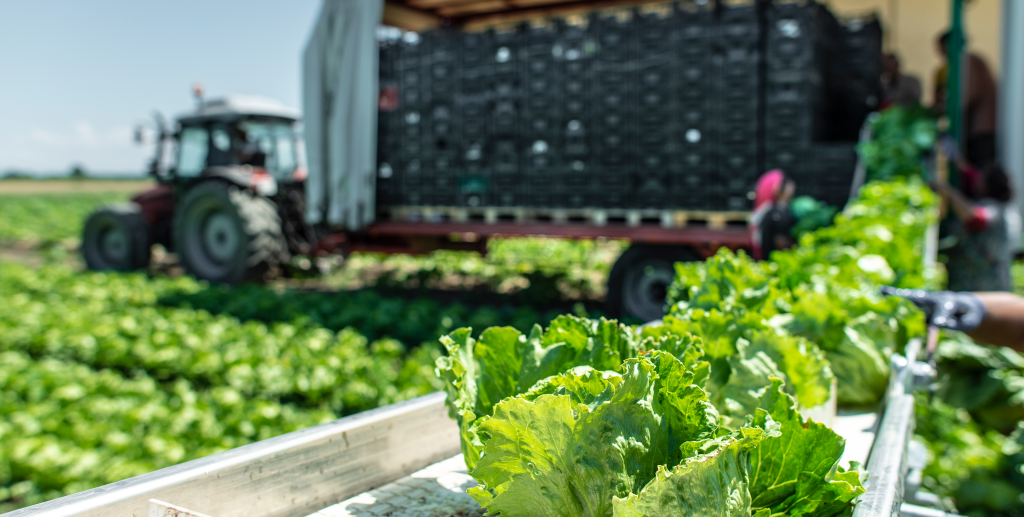
Hands down, smart business decisions come from understanding every part of your supply chain. At National Freight Connection, we've seen how the knowledge of freight logistics shapes successful business strategies, especially in the agricultural sector!
The journey from farm to table has changed from what it once was long ago. Farm firms of today require more than the art of cultivation - they require huge amounts of logistical expertise to succeed in the international economy. Both these combined give a solid foundation for sustainable crop-growing activities and streamlined distribution processes.
Take Garuda Farms in Tipton, Iowa, for example. Their story showcases the perfect blend of innovative farming and strategic logistics planning. Founded by Sean Malone, a former freight logistics expert, this hydroponic farm is changing the way local produce is distributed through:
- Choosing locations wisely
- Making transportation processes simpler
- Keeping products fresh for longer periods
- Reducing harm to the environment
This new way of farming shows how understanding logistics can improve agricultural operations. By knowing how freight works, businesses can make better choices about things like where to set up their facilities and when to deliver their products.
Want to learn how knowledge of freight logistics can improve your business decisions? Let's take a look at the main factors that contribute to the success of operations like Garuda Farms.
Understanding Freight Logistics in Agriculture
Agricultural freight logistics involves the detailed process of transporting produce from farms to consumers. This intricate system includes:
- Planning and scheduling transportation
- Providing storage and warehousing solutions
- Using temperature-controlled shipping methods
- Optimizing the distribution network
- Managing inventory
Freight logistics is best managed when it yields the highest for your bottom line. By optimizing shipping routes and delivery schedules, you save on transport costs by 15-25%. Fresh produce, vegetables, and fruits need to arrive timely - each hour counts to retain freshness and shelf life.
The Importance of Farm Location in Agricultural Distribution
The location of your farm is crucial for successful agricultural distribution. A strategically located farm offers significant advantages:
1. Reduced Transportation Time
- Faster delivery to local markets
- Lower fuel consumption
- Decreased carbon footprint
- Minimized handling requirements
2. Enhanced Market Access
- Direct connections to regional buyers
- Flexible delivery scheduling
- Quick response to market demands
- Fresh-to-market advantage
Overcoming Logistics Challenges in Agriculture
The agricultural industry has unique logistics issues, including peak harvest season volumes and refrigerated cargo. Your delivery capacity is based on diligent planning between harvest times, warehouses, and transportation facilities. A thoughtfully developed logistics strategy ensures your product quality is ensured and delivery efficiency is optimized.
The Benefits of Local Produce Distribution
Locally grown fruits and vegetables have shorter supply chains. Since your farm is within a distance of under 50 miles of major markets, you can provide same-day delivery service and satisfy customers' demands immediately. The proximity factor means fresher produce and happy customers.
Case Study: Garuda Farms in Tipton, Iowa
Garuda Farms is a pioneering farm in the middle of Iowa's cornfield that is upturning conventional farming practices. The innovative venture was conceived from his rich experience in freight logistics, whereby he had perfected the shipping of lettuce, onions, and carrots across the country.
The Problem with Conventional Farming
Malone's logistics background enabled him to recognize an important problem: California's conventional farming methods consumed too much fuel and water in the growth and shipping phases. Knowing this, he began studying hydroponics through internet classes provided by Iowa State, and the Garuda Farms journey began.
How Garuda Farms is Different
Compared to conventional farms relying on soil and pesticides, Garuda Farms cultivates premium varieties of leaf lettuce, such as romaine and Bibb lettuce, round the clock using hydroponics. And here's how they excel:
Soil-Free Development: Their advanced hydroponics enable plants to grow soil-free.
Pesticide-Free Farming: They opt for organic practices by refraining from toxic pesticides.
Year-Round Production: With complete control over factors such as water, nutrition, and light, they are able to grow lettuce year-round.
The Impact of Location
Strategically located in Tipton, Iowa, Garuda Farms is privileged to be close to large markets, including Quad Cities, Iowa City, and Cedar Rapids. This facilitates Malone to utilize his logistic knowledge in developing shorter and more effective delivery routes.
As a result of these efforts:
- Their lettuce stays at its freshest for 4-5 weeks.
- Restaurants appreciate this significant advantage as it helps them reduce food waste and maintain consistent quality.
The Advantages of Hydroponic Farming Supported by Logistics Expertise
Hydroponic agriculture is revolutionizing the conventional business of agriculture with its new water-saving design. This new mode of cultivation requires as much as 90% less water than traditional farming and does away with pesticides and herbicides.
Advantages of Hydroponic Agriculture
Following are some of the most important benefits of hydroponic agriculture:
Water Efficiency: Hydroponics requires much less water than conventional methods of cultivation.
Pesticide-Free: Hydroponics is not based on deadly pesticides or herbicides.
Increased Growth: Hydroponic plants grow 30-50% quicker than soil-grown plants.
Year-Round Harvesting: The controlled environment of Hydroponics makes it possible to produce the same crops year-round.
How Hydroponics Works
In hydroponics, plants are cultivated in a water-based nutrient solution and not in the soil. This technique supplies all the nutrients to the plants for their growth. Hydroponics provides farmers with an environment where some of the variables affecting the growth of the plants can be controlled by them, including:
- Nutrient delivery
- Light exposure
- Temperature control
- pH levels
- Humidity
By optimizing these conditions, farmers can create an ideal environment for plants to thrive.
The Role of Logistics in Hydroponic Farming
Though hydroponics itself is of much value, strategic logistics expertise can expand its value even more.
Hydroponics and strategic logistics combine to make a highly effective system:
Fewer transportation steps: With locally producing plants powered by hydroponics, fewer transportation steps are needed to deliver the produce straight to the table.
Shorter delivery distances: By being nearer to high-demand urban centers, delivery routes may be bundled and travel times minimized.
Longer shelf life for produce: Hydroponic fruits and vegetables are generally harvested at optimal ripeness and are shipped straight away, thereby having a longer shelf life than conventionally produced ones.
Reduced food wastage: The cyclic harvesting made possible by decentralized hydroponics allows for more planning and coordination along the supply chain so that there is no excess or surplus.
Secure supply chain: With a regular output of produce and dependable logistics processes in place, companies can attain greater predictability of supply chain activity.
Benefits to Local Markets
These advantages will be especially profound in selling regional markets. The controlled development environment provides for optimal harvest timing, correlating delivery schedules with consumer demand. Production and delivery coordination ensures product freshness accompanied by diminished storage requirements and transportation expenses.
Impact of Freight Logistics on Farm Business Decisions
Smart freight logistics reshape traditional farming decisions in remarkable ways. Your knowledge of transportation and storage directly influences when and what to grow.
Consider these critical decision points:
Harvest Timing: Understanding delivery schedules helps you plan harvests to align with carrier availability and market demand
Crop Selection: Choose crops that maintain quality during specific transport conditions and timelines
Storage Requirements: Select varieties that match your cold chain capabilities and distribution network
Strategic farm locations, like Garuda Farms in Tipton, demonstrate how proximity to markets creates a ripple effect of benefits. A 50-mile radius to major cities means produce reaches customers within hours of harvest - not days. This short travel distance translates to:
- Fresh produce staying market-ready 4-5 weeks longer
- Restaurants reporting significant reductions in spoilage
- Consumers enjoying longer-lasting produce at home
The statistics are compelling: companies reduce their food waste by up to 30% when they procure from local farms that have streamlined logistics. Such a waste reduction grows their bottom line while making their business sustainable.
Enhancing Local Produce Distribution Through Strategic Logistics
Strategic positioning in Tipton creates a distribution sweet spot for reaching key Iowa markets. Garuda Farms' 50-mile radius encompasses the bustling communities of:
- Quad Cities
- Iowa City
- Cedar Rapids
This proximity enables same-day deliveries, transforming the traditional produce supply chain. Restaurants receive fresh lettuce within hours of harvest - a stark contrast to week-long cross-country shipping.
Local distribution routes are designed for maximum efficiency:
Direct-to-Kitchen Delivery: Eliminating multiple handling points
Temperature-Controlled Transport: Maintaining optimal freshness
Flexible Scheduling: Accommodating specific restaurant needs
The local distribution model creates a ripple effect of benefits. Restaurants gain reliable access to premium produce. Local economies stabilize via farm-to-table structures. Carbon footprints are reduced with reduced transportation miles.
This tactic in distribution is a perfect reflection of the increasing consumer desire for sustainable food systems. Buyers like knowing their vegetables and fruits are locally sourced, and businesses value ensured quality and consistent delivery timelines.
Sustainable Solutions to Traditional Farming Made Possible by Logistics Management
Old-fashioned "Big Lettuce" supply systems depend on a chain of transportation steps: field harvesting, washing plants, numerous packing houses, and state-to-state long-haul trucking. Each step incurs time, money, and the environment.
Garuda Farms revolutionizes this approach through strategic logistics management:
Direct-to-Market Distribution: A single transport step from farm to customer
Reduced Carbon Footprint: Minimal fuel consumption with local delivery routes
Water Conservation: Hydroponic systems use 90% less water than conventional farming
Zero Pesticide Usage: Indoor growing eliminates the need for chemical treatments
This streamlined model creates a ripple effect of benefits:
- Fresh produce stays market-ready for 4-5 weeks
- Restaurants report a significant reduction in food waste
- Lower operational costs support competitive pricing
- Reduced environmental impact aligns with consumer values
Sean Malone's business acumen makes this green transition possible, proving that sustainability and good business acumen are not mutually exclusive. Garuda Farms shows us how well-thought-out positions and good distribution channels can redefine farm sustainability.
Leveraging Technology and Experience for Scalable Freight Solutions
At National Freight Connection, we owe our success to our ability to form strategic partnerships with carriers that support multi-location distribution centers. Decades of years of experience in logistics management have honed our skills in matching the right carrier with specific business needs.
Key Elements of Our Scalable Solutions:
- Custom carrier partnerships tailored to distribution requirements
- Real-time tracking and monitoring systems
- Data-driven route optimization
- Flexible capacity management
Our scale is founded on a solid grasp of many industry requirements. For example, when a major client approached us with sophisticated distribution center demands, we were able to recognize and obtain a leading carrier alliance. This example not only brought in more operations on multiple sites but also provided us with an example to emulate for continuing growth.
Our logistics management function allows us to:
- Examine transportation trends
- Pinpoint cost savings opportunities
- Streamline delivery operations
- Make adjustments as businesses evolve
This structured methodology for freight solutions has been attractive to partnerships with best-in-class companies within many industries. Staying dependent on our proven methods and leveraging cutting-edge technologies, we enable businesses to maximize their supply chains without sacrificing the capacity to expand operations as dictated by market demand.
Choose National Freight Connection
Smart freight logistics expertise transforms business decision-making from speculation to competitive advantage. Our success stories show how logistics expertise makes waves across operations - from higher sustainability to greater market access.
Your company needs a logistics partner who is familiar with these nuances and possesses the knowledge to design solutions according to your growth objectives. At National Freight Connection, we're committed to assisting you in maximizing the full potential of strategic freight management.
Ready to automate your logistics processes?
Reach out to us at National Freight Connection today at (931) 200-5601 to explore how our freight logistics know-how can propel your business into the future. Let's craft a customized solution that sets your business up for long-term success.