
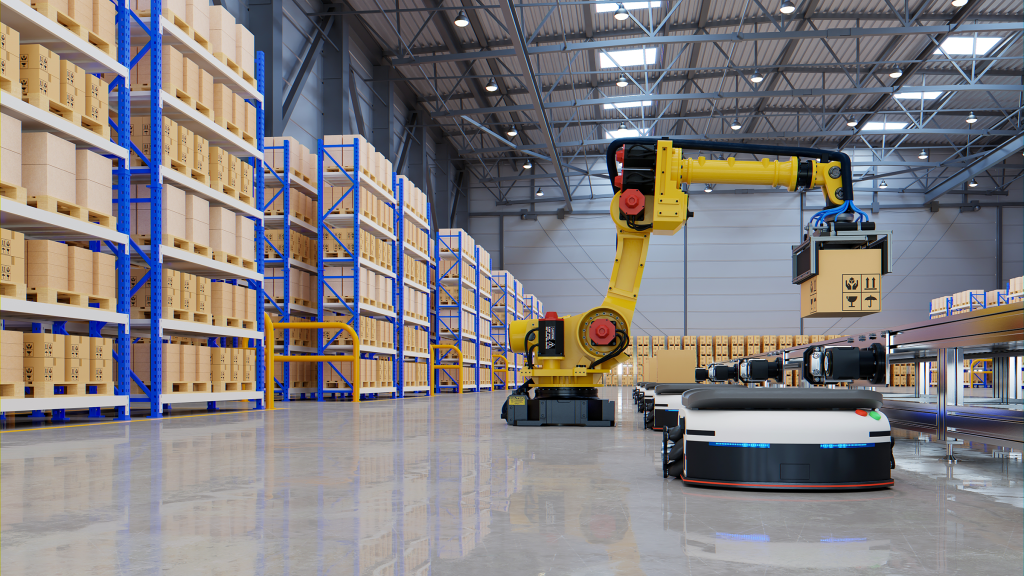
Implementation of robots in the warehouses by Amazon has totally revamped the whole process of logistics management in the current times. Since Amazon acquired Kiva Systems, it has been deployed in 2012 for $775 million and has already employed more than 7 worldwide fulfillment centers across the world.
So what do these robots actually do?
Amazon's robotic systems handle a large number of vital tasks within the fulfillment centers. They are quite good at managing stock, keeping systematic records, and tracking items inside the massive warehouses. The efficiency with which robots sort packages categorizes the items according to multiple criteria, including destination and shipping priority.
One key process is picking and packing items, through which robots help human operators pick and pack products to ship. These systems also manage internal transportation within a warehouse by relocating items and shelves among zones for maximized fulfillment.
How Has This Changed the Industry?
Through the integration of robotics in its warehousing facilities, Amazon has opened a trend in this industry. Traditional warehouses now face immense pressure to automate processes in the wake of stiff competition in the fast-growing e-commerce market.
Why Robotics Are Important to Companies like Amazon
Robotics is important to companies like Amazon because it provides the blueprint for effective logistics management by:
- Reducing processing times from hours to minutes
- Maximizing storage space through innovative shelving systems
- Minimizing human error in order fulfillment
- Operating 24/7 without breaks or fatigue
What Does the Future Hold for Fulfillment Centers?
The future of fulfillment centers lies in advanced robotic systems. As technology evolves, we're witnessing a shift toward fully automated warehouses where robots and AI work together to process thousands of orders daily. This automation trend isn't just about speed - it's about creating scalable, efficient logistics solutions that can adapt to growing consumer demands.
At National Freight Connection, we understand the importance of staying ahead in logistics technology. We help businesses navigate these technological advances to create efficient, future-ready supply chain solutions.
Current Robotic Systems at Amazon
Amazon's robotic fleet showcases some of the most advanced automation systems in the logistics industry. Let's explore these innovative robots transforming warehouse operations:
1. Kiva Robots
- These orange wheeled robots navigate warehouse floors carrying entire shelving units
- Can lift up to 1,000 pounds
- Process over 350 items per hour
2. Hercules and Pegasus
- Drive units designed for sorting and moving packages
- Handle packages weighing up to 1,000 pounds
- Reduce walking time for employees by 50%
3. Titan and Cardinal
- Titan: Moves empty trailers around yards
- Cardinal: AI-powered robotic arm that lifts and moves packages up to 50 pounds
- Both systems use computer vision to identify and handle packages precisely
The integration of AI and machine learning enables these robots to:
- Navigate complex warehouse layouts autonomously
- Adapt to real-time changes in inventory demands
- Learn from experience to optimize routes and handling procedures
Amazon's robotic systems have dramatically improved efficiency metrics:
- Process up to 300 million packages per day during peak seasons
- Reduce order processing time by 50%
- Handle 75% of all Amazon orders through robotics-enabled facilities
These augment human employees by building a hybrid workforce with human problem-solving ability and machine precision. Ongoing innovation of these technologies is driving operations in contemporary warehouses to unprecedented levels.
Investment in Robotics and AI
Amazon is serious about committing to warehouse automation with a whopping financial outlay. This online shopping behemoth accesses an eye-watering capital budget of $100 billion, with significant portions being spent on robotics and AI innovation during 2023.
The investment strategy involves thorough research and development concerning advanced robotics, new updates in AI systems, installing such systems, further infilling infrastructure for automatic facilities, buying new robotic systems, and other software development and integrations.
It goes beyond the investment the company is making in hardware. Since 2019, Amazon has committed $1.2 billion to employee training. Overall training will prepare the worker for operating highly complex robotic systems, performing preventive maintenance, troubleshooting technical faults, handling emergencies in fixing those faults, and managing AI-based inventory systems.
With their Mechatronics and Robotics Apprenticeship, Amazon retools traditional warehouse employees into certified robotics technicians. This 12-week, hands-on training introduces them to advanced automation technologies, opening up new career paths for workers while guaranteeing the fault-free operation of their robotics systems.
Investing in training has helped Amazon produce a specialized workforce that can be relied upon for the maintenance of over 750,000 plus robots spread throughout its fulfillment centers. These specialized technicians are central to maximizing automated systems' efficiency and uptime-the more direct effects on the firm's ability to respond to a growing customer demand.
Benefits and Challenges of Using Warehouse Robotics
With the implementation of robots in Amazon's warehouses, it has seen huge cost cuts in its order fulfillment business. The company believes that it can save up to 70% in processing costs for every order through robotic systems. According to Amazon, this cut has brought down the processing cost per package from $3.50 to approximately $1.
Along with the above-mentioned cost savings, warehouse robotics brings some intricate challenges to the implementation process.
1. Worker Displacement Concerns
Labor unions have reported that over 20,000 jobs have been affected by automation in Amazon's warehouses. In response to this, there have been demands for retraining programs and guarantees of job security for the workers whose jobs are at risk due to automation. Additionally, protests have taken place at multiple fulfillment centers during the years 2022 and 2023.
2. Safety and Injury Rates
It has been observed that in facilities where robots are used, the rate of serious injuries is 50% higher compared to those without robots. Workers are finding it difficult to keep up with the speed of work set by automated systems. According to data from 2022, there were 6.8 injuries for every 100 workers at Amazon.
Although automation lowered workers' physical load when heavy lifting was involved, it brought forth new safety issues with increased speed of work. Workers complained about having to achieve productivity rates set by robots, which led to repetitive strain injuries and accidents from rushed movements.
Advocacy of Labor Organizations
Labour unions are effectively demanding a number of profound changes in automated warehouses. They want lower performance targets so that the workload on employees would be easier to handle because they cannot keep up with robotic systems. They also demand more regular breaks to avoid fatigue and injury. Enhanced safety measures are another major demand to better protect employees in automated environments.
These organizations also stress the need to include workers' views and inputs in decision-making about the use of automation and to take their experience and concerns in the field into account when planning new systems.
Amazon is still firm on its belief that robots make workplaces safer, but it also recognizes that human work and machines can better be aligned. To address these worries, the company recently spent $300 million on safety initiatives that focus on better training and adjusting performance goals.
Future Opportunities and Industry Competition in Warehouse Robotics
Amazon's warehouse robotics technological advancement has a strong rival in retail giant Walmart. In 2023, Walmart announced a $3.5 billion bet on warehouse automation, citing the increasing significance of robotics in retail logistics.
The latest era of warehouse robotics introduces advanced technologies:
Digital Twin Technology: Virtual copies of physical warehouses allow real-time tracking and robot motion optimization. Digital models enable the simulation of various scenarios, shortening robot training time by as much as 50%.
Advanced Computer Vision: AI-powered cameras enable robots to detect, sort, and pick products with increased precision. The technology enables robots to adjust to new product sizes and shapes without reprogramming.
Autonomous Mobile Robots (AMRs): The newest wave of warehouse robots are capable of dynamic movement, obstacle sensing, and sharing space with human employees. These robots leverage machine learning to become more efficient with time.
Walmart's strategy involves rolling out market-proven solutions from several robotics providers. This strategy is distinct from Amazon's in-house automation development model, fostering a varied warehouse automation ecosystem.
The battle for warehouse automation becomes fiercer as both retailers foray into new technologies. Amazon has a robotics division that aims to create tailored solutions, while Walmart collaborates with existing robotics players to drive deployment. The rivalry fuels innovation in the logistics space, pushing the limits of what is possible in automated warehouse operations.
Choose National Freight Connection
Warehouse robotics development offers opportunities and challenges for companies across all industries. Companies that adopt robotic technology can gain dramatic operational efficiencies, cost savings, and increased accuracy in their logistics processes. Success, though, is dependent upon careful consideration of workforce effects, safety procedures, and continuous maintenance needs.
At National Freight Connection, we recognize the intricacies involved in logistics management today. Our experience guides companies through the changing warehouse automation landscape in a balance of technology and human labor needs.
Ready to optimize your logistics operations? Contact us at (931) 200-5601 for tailored solutions that align with your business goals and operational requirements.