
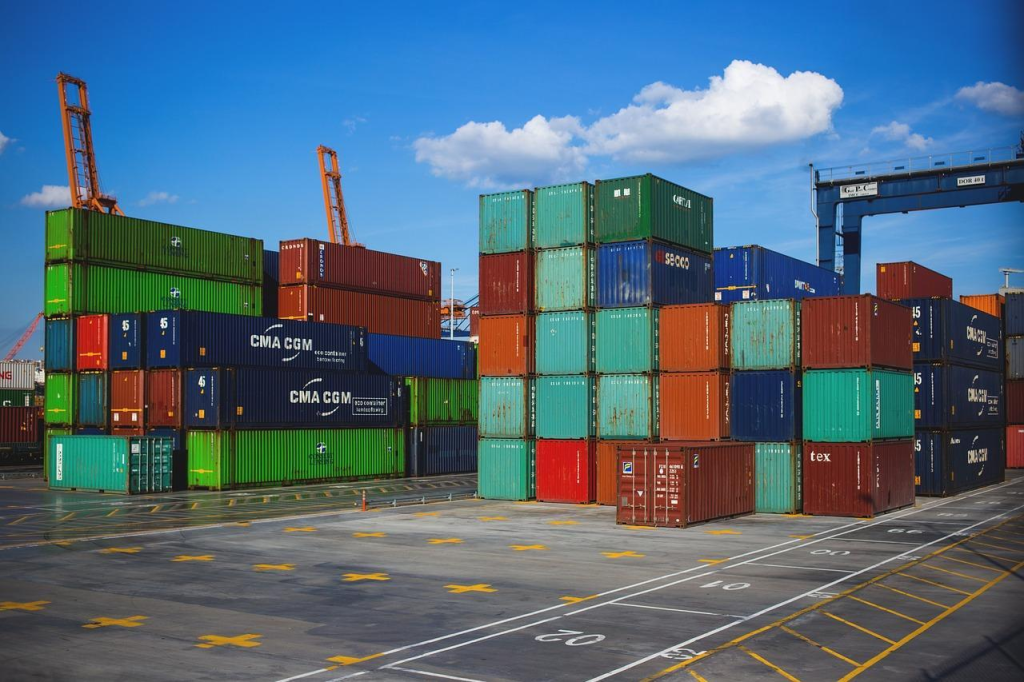
Did you know? Something as simple as a large metal box has revolutionized global commerce and our way of life. Simply put, that's what intermodal containers have done. Made to be easily transported across different modes of transportation, these standardized steel boxes have become a must in modern-day logistics.
The Problem Before Intermodal Containers
Before 1956, shipping goods internationally was expensive and took a long time. Workers had to load cargo onto ships piece by piece, which could take weeks to finish.
How Intermodal Containers Changed Everything
Now, thanks to intermodal containers, things are different. Your smartphone from China, clothes from Bangladesh, and fresh oranges from Florida can be brought to your doorstep with incredible speed and at a lower cost.
The Benefits of Intermodal Containers
- Time-Saving: Reduced from weeks to merely hours in handling cargo.
- Cost-Reducing: Standardization significantly reduced shipping costs.
- Increased Efficiency: Goods can now be transported smoothly across different modes of transport.
The Universal Language of Shipping
Intermodal containers created a global shipping standard with their standardized size. This means that the same container can be used for transportation anywhere worldwide- Kansas, China, or Russia. One container can travel through all these modes of transport: truck, train, ship, and plane.
The Impact on Global Trade
The result? A veritable global marketplace where goods could easily travel from one continent to another. This standardization didn't just make shipping more efficient; it helped ignite an international trade revolution that still shapes our world today.
Understanding Containerization
Prior to 1956, the method of shipping cargo was very slow and was known as break bulk cargo. Stevedores (port workers) loaded individual items, piece by piece, down into ships' holds, from whiskey bottles to rice bags and hammers. This ancient method presented several problems: lengthy loading times, high risk of theft and damage, inefficient use of space, and substantial labor costs.
A trucking company owner, Malcolm McLean, changed this centuries-old practice. His innovative solution? A simple yet powerful concept, the standardized shipping container. McLean's design featured corrugated steel construction, universal dimensions, seamless compatibility with trucks and ships, and secure, sealed transportation.
The Ideal-X, a converted World War II tanker, heralded the birth of containerization on April 26, 1956. This maiden voyage from Newark, New Jersey, proved the strength of McLean's system of containerized shipping. The system established a direct connection between producers and consumers by bypassing many handling points and significantly reducing theft.
The real magic of containerization lies in its universality: whereas nations can't agree on currency, electrical standards, or driving sides, the dimensions of the shipping container remain the same around the world. A container filled in Kansas will roll easily onto the trains, boats, trucks, and specialized planes of a dozen other nations, without special logistics or any complicated math at all.
How Intermodal Containers Work
The genius of intermodal containers lies in their simple, revolutionary design. These standardized boxes are made from corrugated steel and create a universal system that seamlessly connects global supply chains.
From Factory Floor to Your Door
Manufacturers load products directly into containers at their facility, where containers are sealed, ensuring cargo security throughout transit. No human hands touch the merchandise until final delivery, and products arrive safely at vendors, distributors, or consumers.
Universal Compatibility
The real magic of intermodal shipping is realized through perfect standardization. A container loaded in Kansas will fit trucks moving down highways, trains crossing continents, ships sailing across oceans, and modern cargo planes. This global fit eliminates complicated logistics calculations. There will be no need to consider the compatibility of containers in other countries or with different transportation methods. The system is like a global set of building blocks - each piece fits perfectly with the next.
Design Innovation
The container's design takes durability during ocean transport, efficient transfer between different vehicles, safe stacking capabilities, weather resistance, and theft prevention into consideration. Modern containers are specialized units with a wide range of choices, from refrigerated containers for perishables, open-top for oversized cargo, tank containers for liquids, and flat racks for machinery. All these factors together result in the smoothness of the flow of goods across continents, and intermodal transport today has emerged as an efficient and cost-effective system for international trade.
Economic Impact of Intermodal Containers
The introduction of intermodal containers revolutionized the economics of global trade. Loading times were cut from weeks down to just a few hours, bringing shipping costs down, and the ripples ran deep into industries and economies.
Growth of Port Cities
The growth and development in port cities have been tremendous. Newark, New Jersey, evolved from the birthplace of containerization to a leading economic hub, while Oakland, California, transformed from obscurity to a critical West Coast shipping center. Other port cities around the world expanded to handle larger container ships.
Shifts in Manufacturing Decisions
The economics of containerized shipping shifted manufacturing decisions. Companies today find it profitable to manufacture goods on the opposite side of the world, get materials from a handful of countries, and develop complex international supply chains.
Astonishing Consequences
This shift in economics had some astonishing consequences. Shipping time from Europe to Australia was halved from 70 to 34 days. The average length of cargo shipment increased by 40% from 1993-2002, and a wider range of goods became economical for international shipment.
An Interconnected Global Marketplace
The container system made the world market truly interconnected. Today, a single car can have parts from dozens of countries; such a manufacturing approach would have been financially impossible before containerization. That interconnectivity has opened international trade for companies of all scales, democratized global commerce, and given way to new possibilities for economic growth.
Innovations in Shipping Due to Intermodal Containers
The shipping industry is always looking for ways to become more efficient, which has generated some amazing new ideas beyond the container itself. The most notable of these changes occurring right now has to be port automation, whereby robots are being used to move containers around. This reduces mistakes while speeding up the loading process.
Finding the Right Balance
Speed and profit go hand in hand in today's world of shipping. The average speed of most ships is 15 knots, which is the optimum speed to save fuel while still delivering goods on time. With technological improvements, this speed limit is still practical because going faster means using more fuel and making less money.
Shifting Focus: Optimizing Routes and Operations
Instead of faster, the industry is now focused on improving how routes are planned and operations are conducted. Port automation improvements in crane systems and automated guided vehicles make container handling more efficient. Containerships are purpose-built for this type of cargo, maximizing cargo carrying capacity. New shipping lanes, made possible by climate change, such as the Northeast Passage, are being explored.
The Game-Changer: The Northeast Passage
The Northeast passage really is a game-changer when it comes to shipping routes. In fact, the first commercial vessel went through this route in 2009, up north of Scandinavia and Russia. The route chops several days off shipping between Europe and Asia. It saves around $300,000 per voyage in fuel; the ships now completely avoid areas of high risk in the Red Sea and Gulf of Aden. The new routes are re-creating world logistics and changing what we thought was possible for international trade and commerce.
Environmental Considerations and Challenges
Climate change brings unexpected changes to the shipping industry. Traditionally frozen and impassable, the Northeast passage now offers a viable shipping route for several months of the year. In 2009, a German cargo ship became the first commercial vessel ever to make history by navigating through this path, and it has since become a huge change in world shipping.
This new route provides considerable advantages in the form of reduced travel time between Europe and Asia, $300,000 in fuel savings per vessel per voyage, and safer passage by avoiding pirate-prone areas such as the Red Sea. But these developments pose serious environmental questions. That increased accessibility of the Arctic routes comes thanks to global warming, the very same phenomenon putting coastal communities and marine ecosystems in harm's way.
The shipping industry has to make a difficult tradeoff balancing economic pluses in terms of offering shorter routes, lower fuel consumption, and lower operating costs with the negatives of harming the Arctic ecosystems, contributing to carbon emissions with increased traffic, and spilling oil into sensitive environments.
The challenge to industry is to achieve maximum efficiency with minimum environmental impact. Now, the watchword of port authorities and shipping companies is sustainable practices, including alternative fuel options, new vessel designs that are more energy-efficient, and environmentally friendly regulatory requirements.
When truckload capacity tightens, containers shift to the rail, and that is exactly what is happening under the current import surge, as I laid out in the tariff-deadline rush pushing freight onto intermodal.
Choose National Freight Connection
Intermodal containers revolutionized world trade, making it easier and much cheaper to transport goods anywhere across the globe. These steel boxes have also developed a standard method of shipping that directly connects manufacturers with consumers, saving time and money.
Are you ready to optimize your business' shipping? At National Freight Connection, we specialize in creating efficient intermodal solutions tailored to your business needs. Our freight logistics expertise helps companies like yours navigate through the complex world of global shipping.
Let's talk about your shipping needs! Give us a call at (931) 200-5601 today.
Change your logistics strategy with the power of intermodal shipping, contact us today!